
Food is Culture
Food is culture. Although every culture is different and unique, each one has its own traditions of preparing and eating food. The ways in which food is crafted and consumed may differ, but what the food represents is universal. Food is used to celebrate, communicate, and bring communities together. Food is the great unifier - it transcends language, race, ethnicity, sex, sexuality, age, class.
In preparation for Panama - the place that I will call home for 27 months - I have decided to start learning more about Panamanian culture. And since food is culture, what better way to learn about Panamanian culture than to prepare some traditional dishes. Through an internet search of traditional Panamanian recipes I came across two items that looked simple to prepare and appetizing to eat: bollos and patacones.
The recipe I used for the bollos is by Erica Dinho at http://www.mycolombianrecipes.com/bollos-de-mazorca-steamed-fresh-corn-rolls
The recipe I used for the patacones is by Layla Pujol at https://www.laylita.com/recipes/patacones-or-tostones/
Bollos
Similar to tamales, bollos are a steamed corn-based dough. While they are a traditional Panamanian food they can also be found, in different variations, in other Latin American countries. The recipe I used was actually one from Colombia. The bollos that I prepared are simple and only required four ingredients:
5 fresh ears of corn, with husks or dried corn husks
2 tablespoon of corn meal
2 tablespoons of sugar
1/2 teaspoon of salt
With this amount of corn I was able to make six medium-sized bollos. The amount of each ingredient can be adjusted to suit your personal preference of texture and taste. The next time I make these I plan on using more corn meal and a little more salt. Bollos can also be stuffed with any combination of meat and vegetables. Here's how I made simple bollos following Erica Dinho's recipe:
1. I began by shucking the corn. Note: if you purchase corn that has already been shucked then you will need to buy dried shucks separately. I saved the first two layers of husk that I removed to be used for wrapping the bollos later. The rest of the husks were too small to use so I gave them, along with the corn silks, to my goat for a treat.
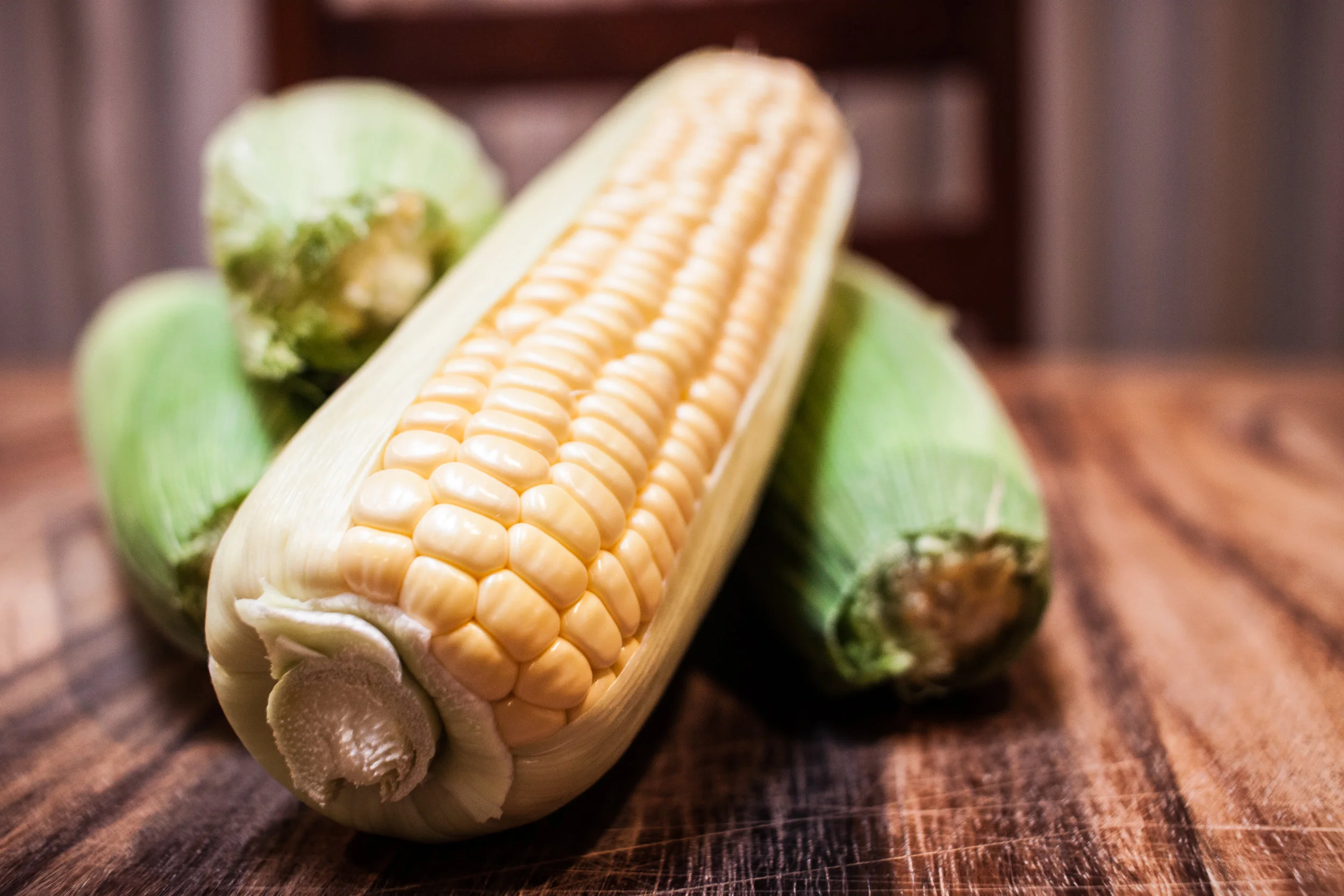
Shucking the corn.
2. While I was shucking the corn I used the tea kettle to boil some water. I placed the large corn husks that I saved into a bowl and poured the hot water over them. I let them sit in the water bath until I was ready to use them to wrap the bollos.
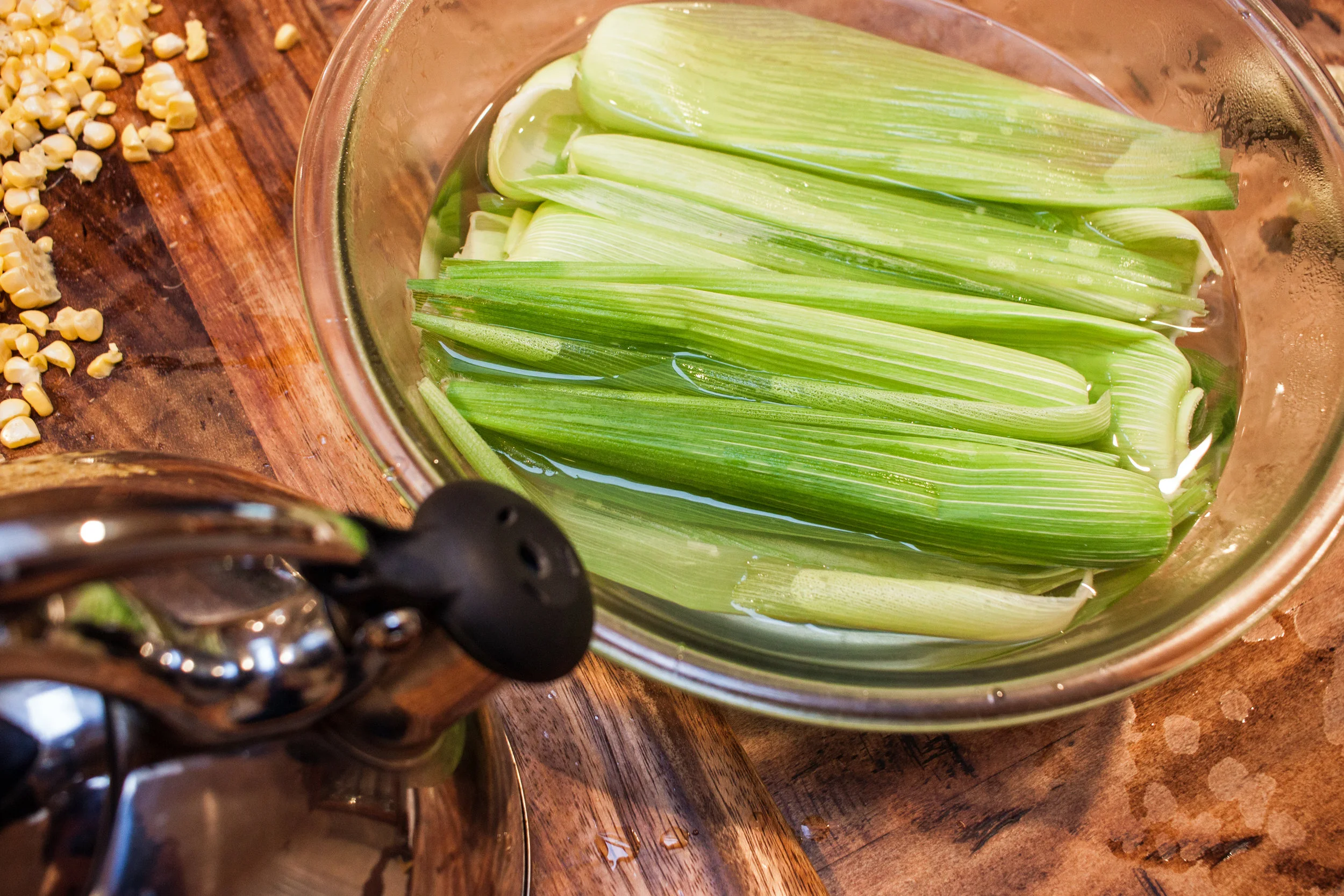
Soaking the large corn husks in hot water.
3. The next step was to remove the corn from the cob. My mom helped me with this step since it was probably the most time consuming one. I used a serrated knife while my mom used a tool meant for this specific task - a corn zipper.
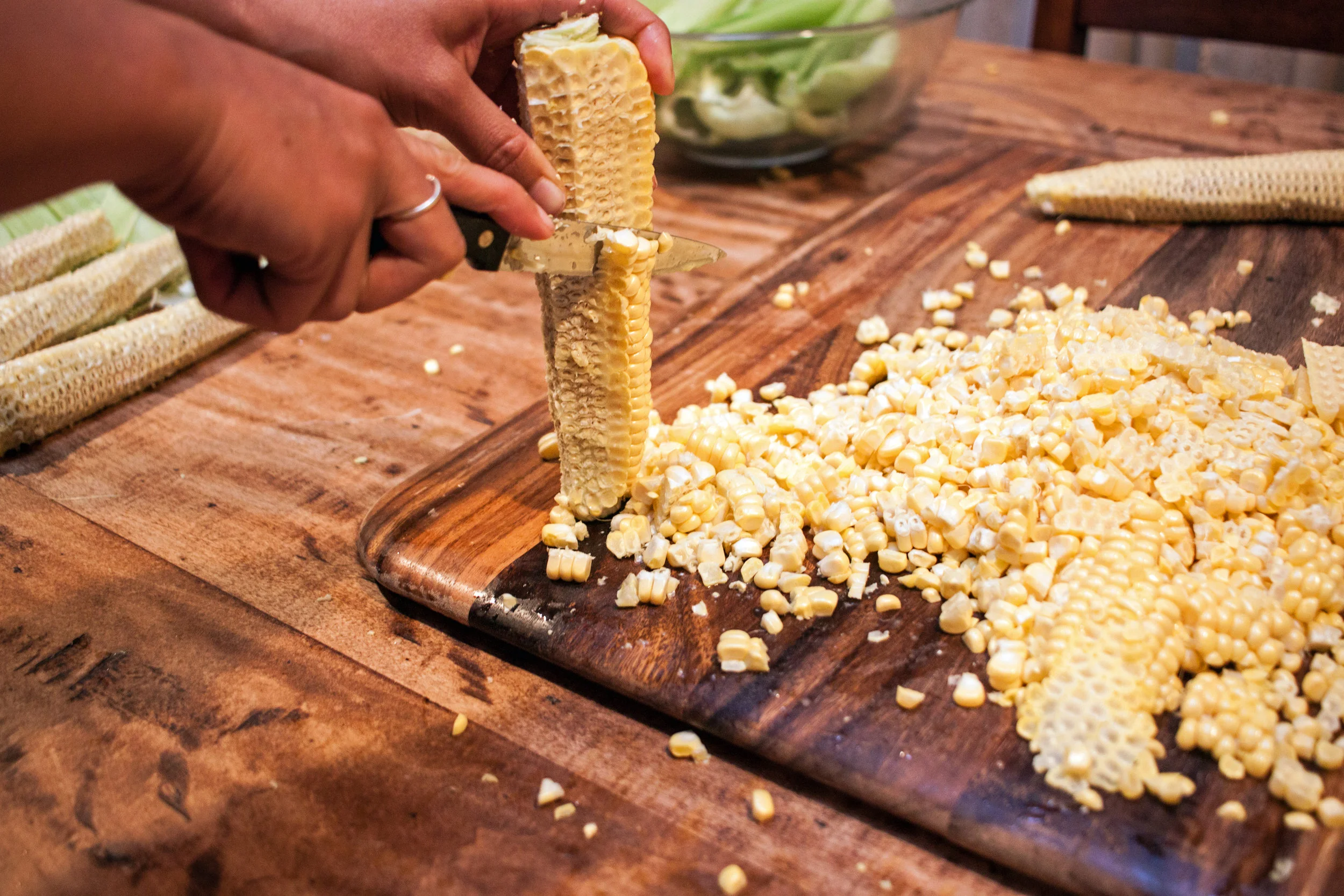
Cutting the corn off the cob.
4. Next I added all the ingredients to the food processor. The food processor I used was not very big, so I started by only adding about half the corn. After that was pulverized there was more room for the rest of the corn.
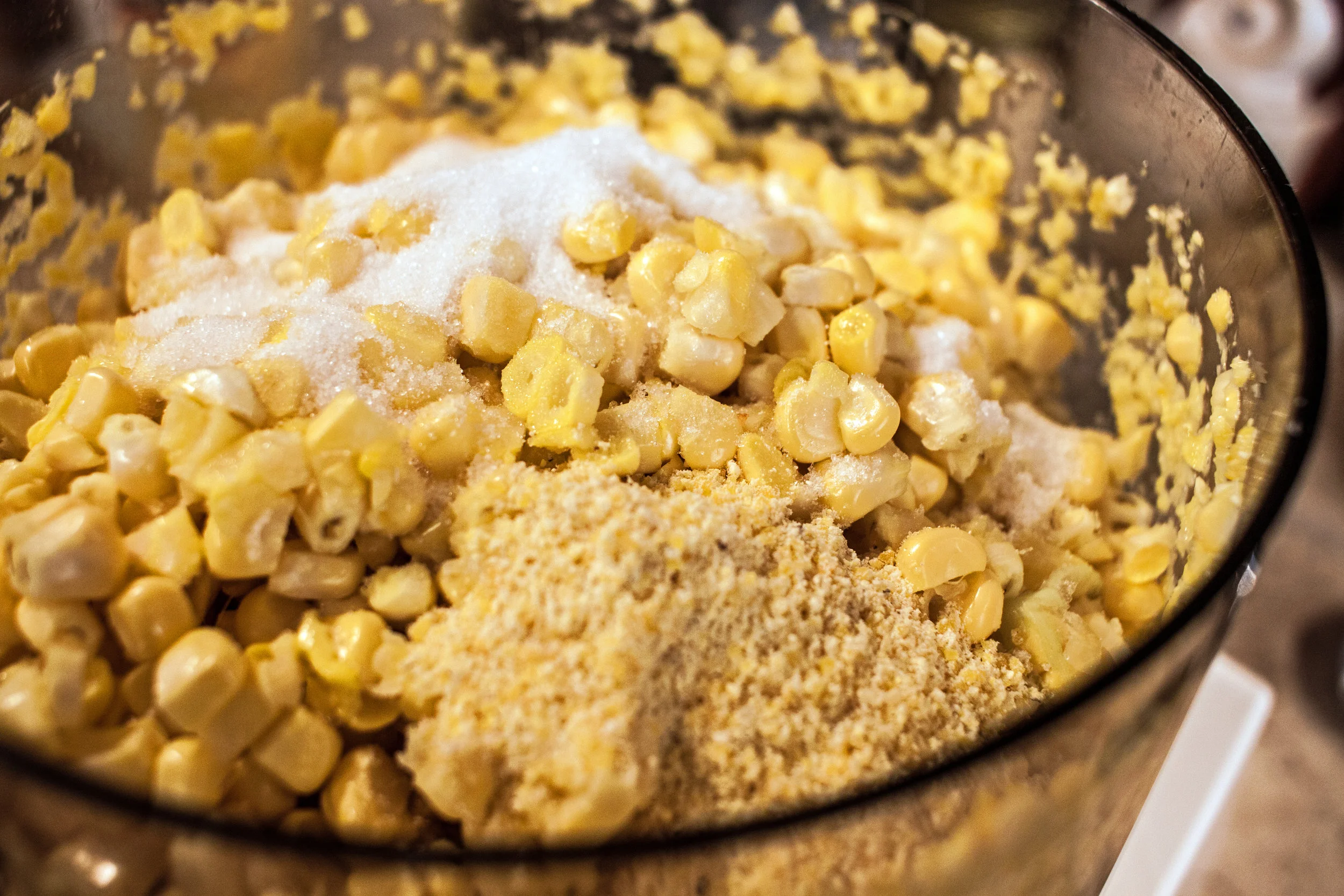
Adding the ingredients to the food processor.
5. Once the ingredients are thoroughly blended the mixture will be watery. This is from the moisture held inside the corn kernels. For this reason the mixture must be strained. I found that even after I strained the mixture it still had a lot of moisture. For this reason I would consider adding more corn meal.
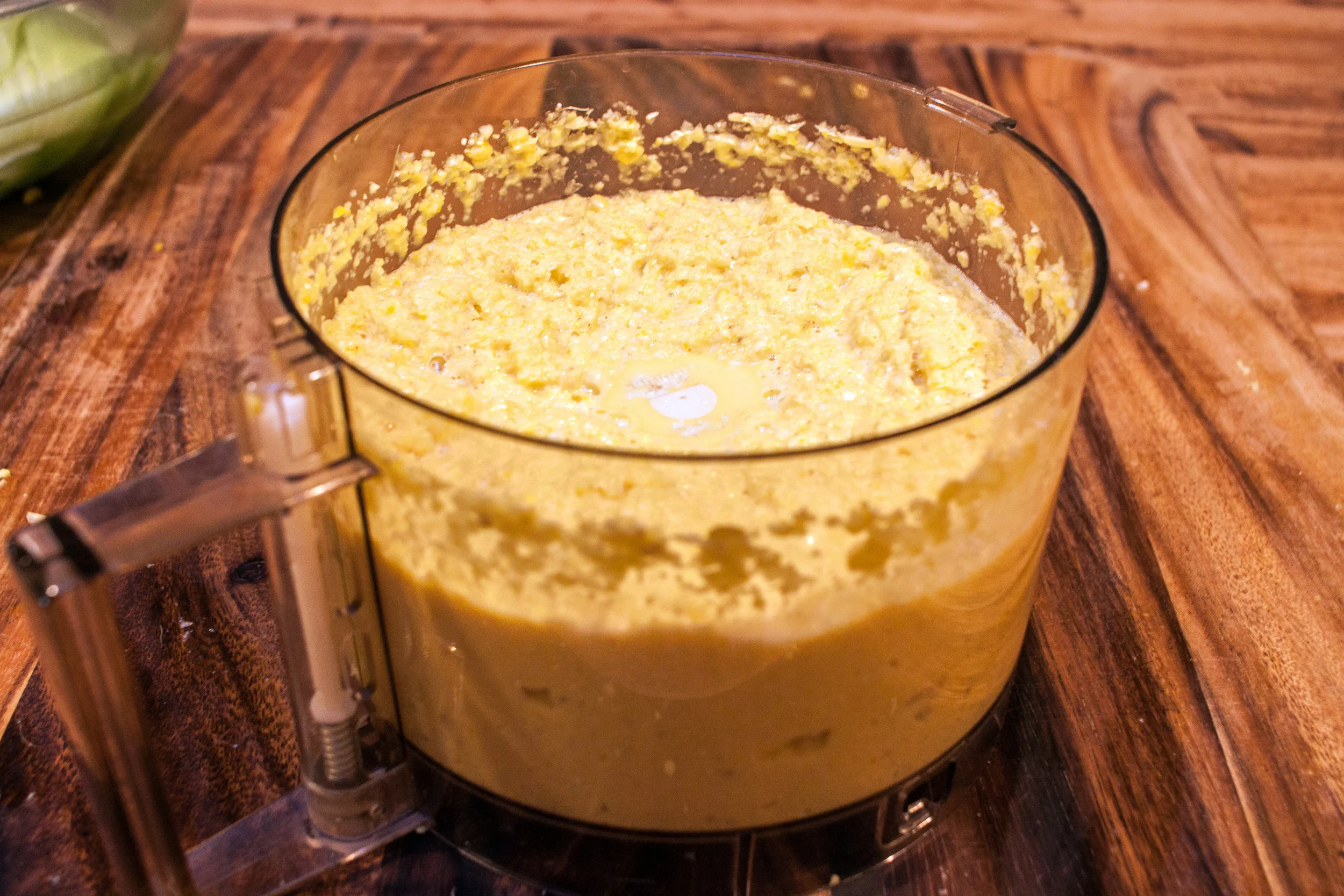
Processing the ingredients.
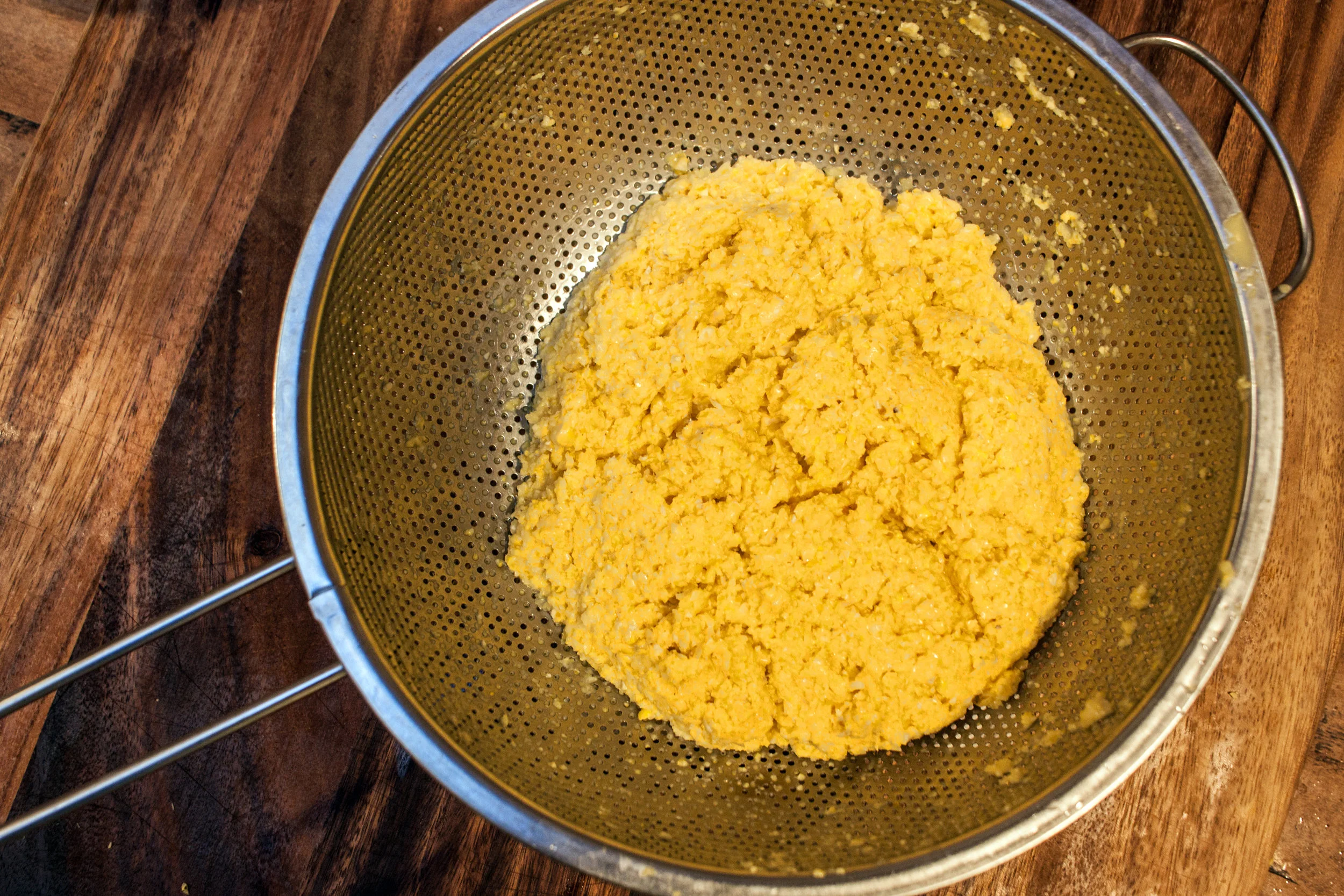
Straining the corn dough.
6. I let the mixture continue to drain while I dried of the corn husks that had been soaking in hot water. I used paper towels to dry them off.
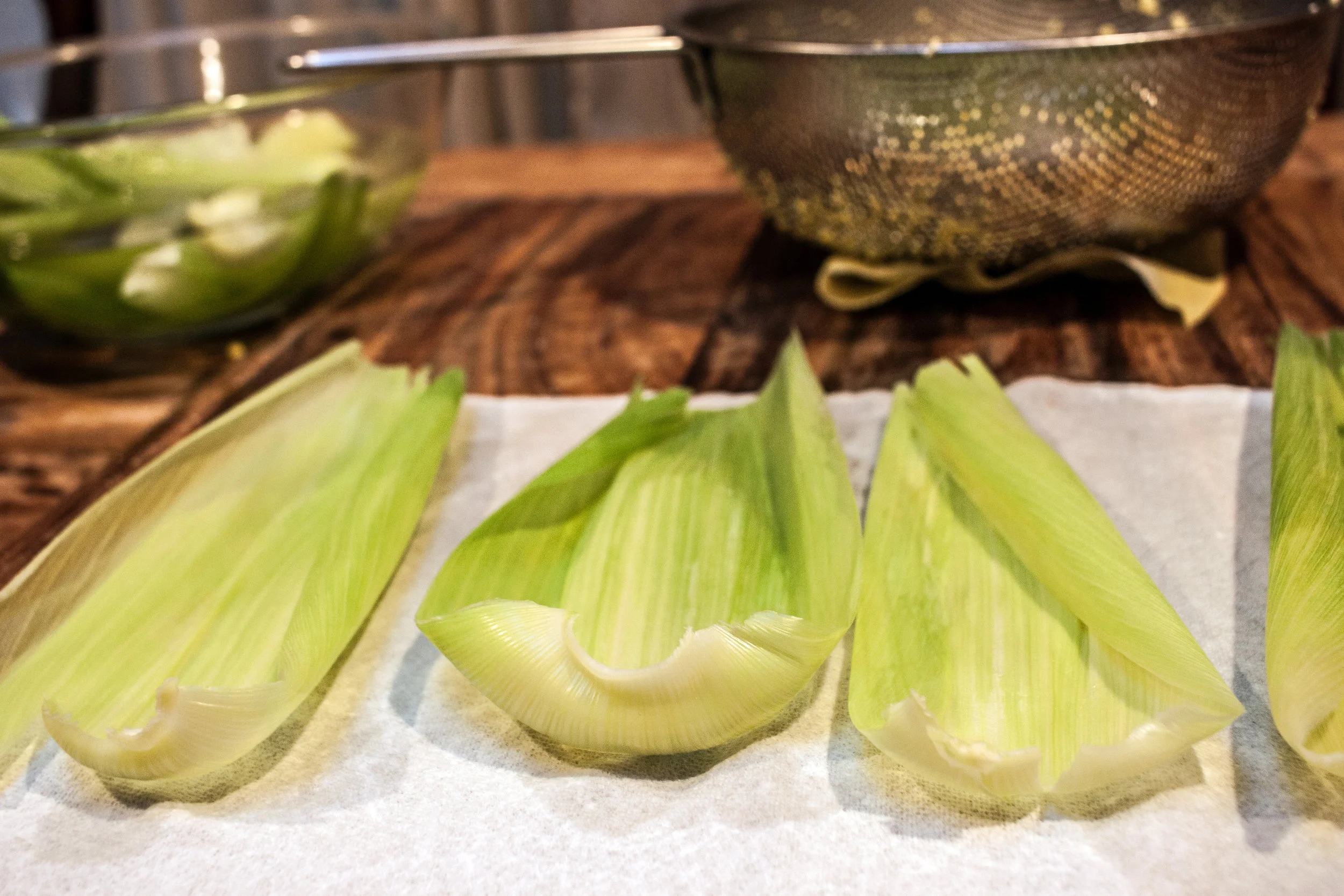
Drying the corn husks.
7. I filled each corn husk with 3-4 large spoonfuls of corn mixture. I rolled up the husk, twisted the ends like a candy wrapper, and had my mom help tie the ends with twine. The bollos were now ready to be cooked.
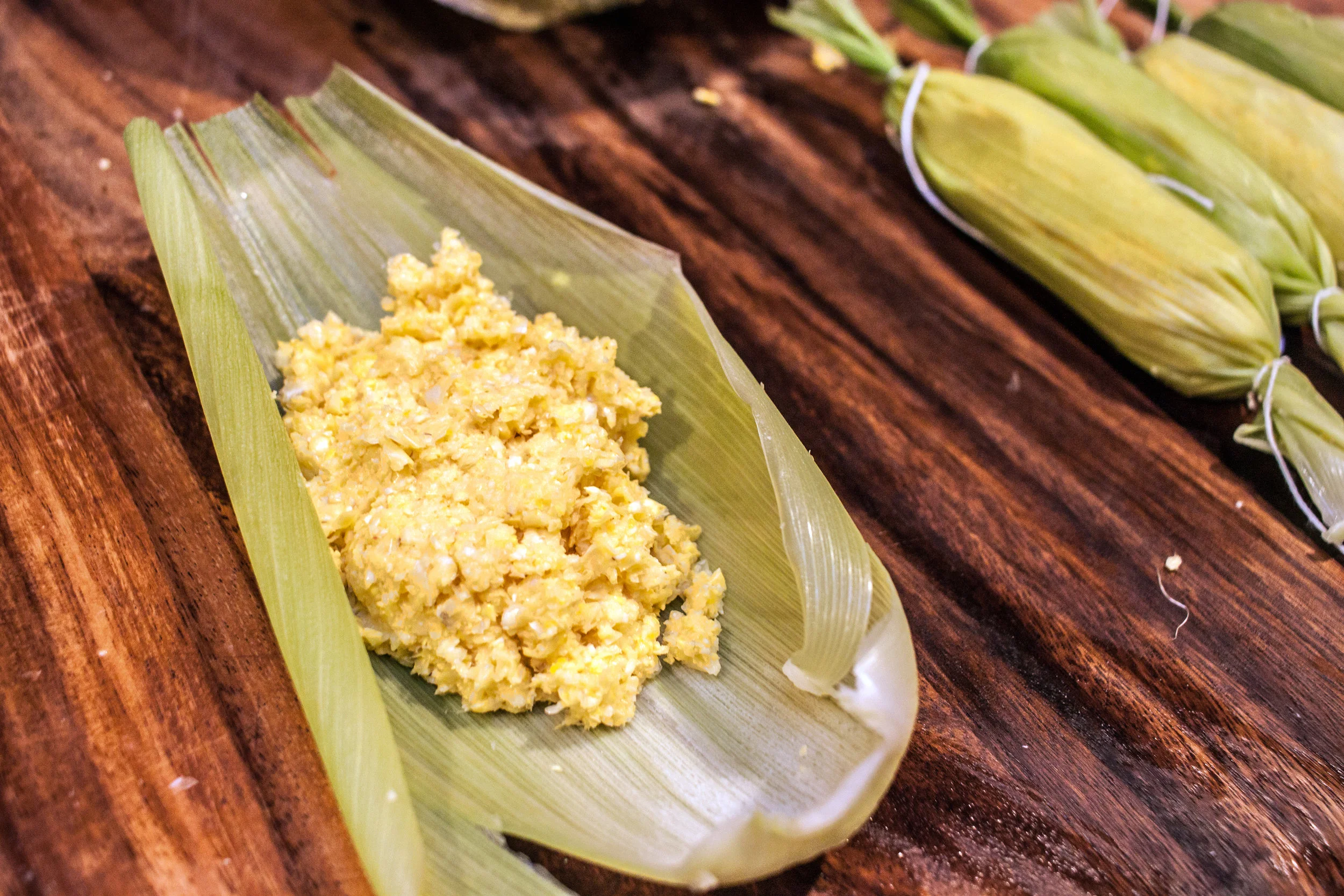
Stuffing the corn dough into the corn husks.
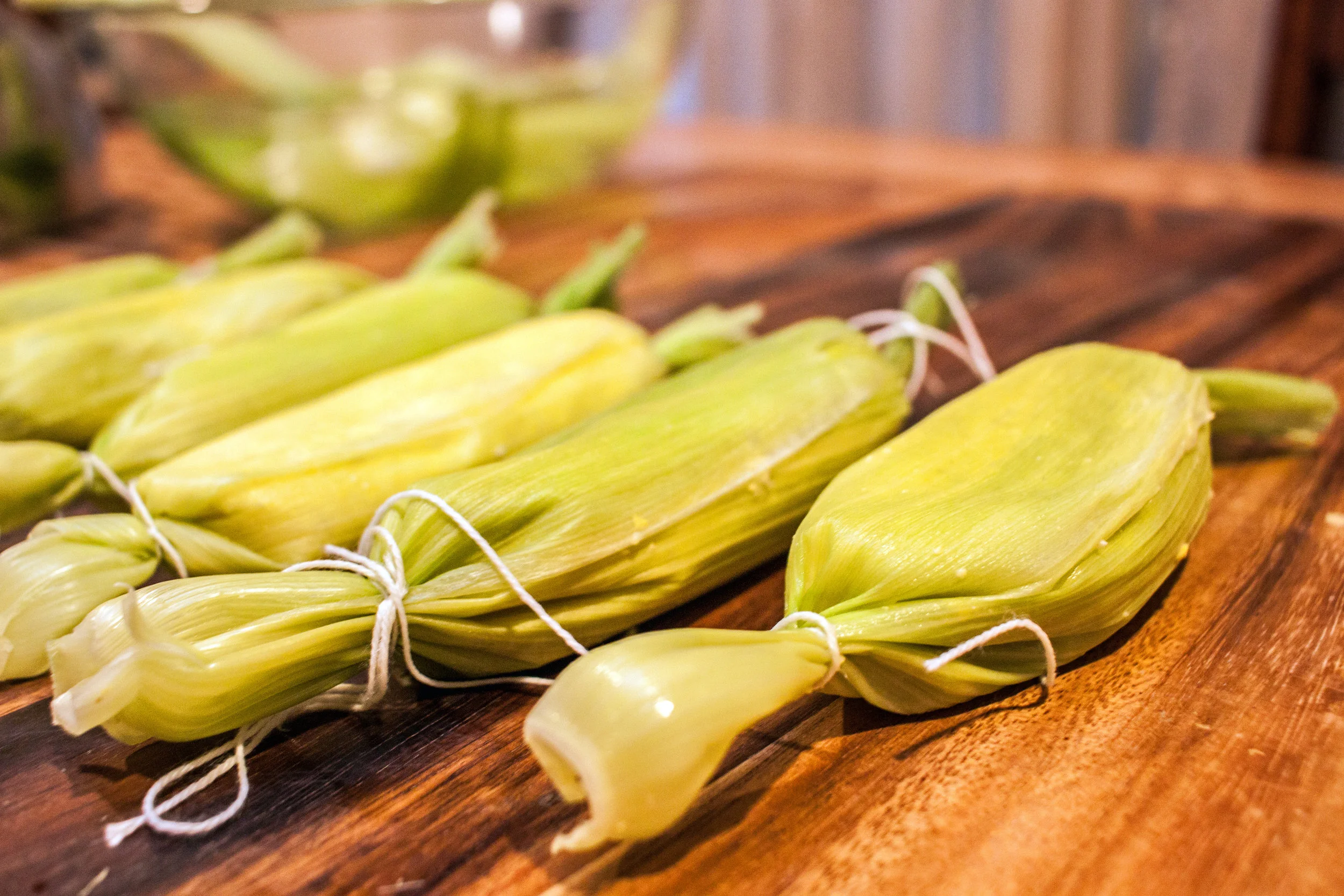
Tying off the uncooked bollos.
8. After steaming for 30-40 minutes the bollos were done. I originally planned to top them with butter and shredded cheese, but forgot. They tasted delicious regardless.
Next time I want to try adding some onion, cheese, and spinach!
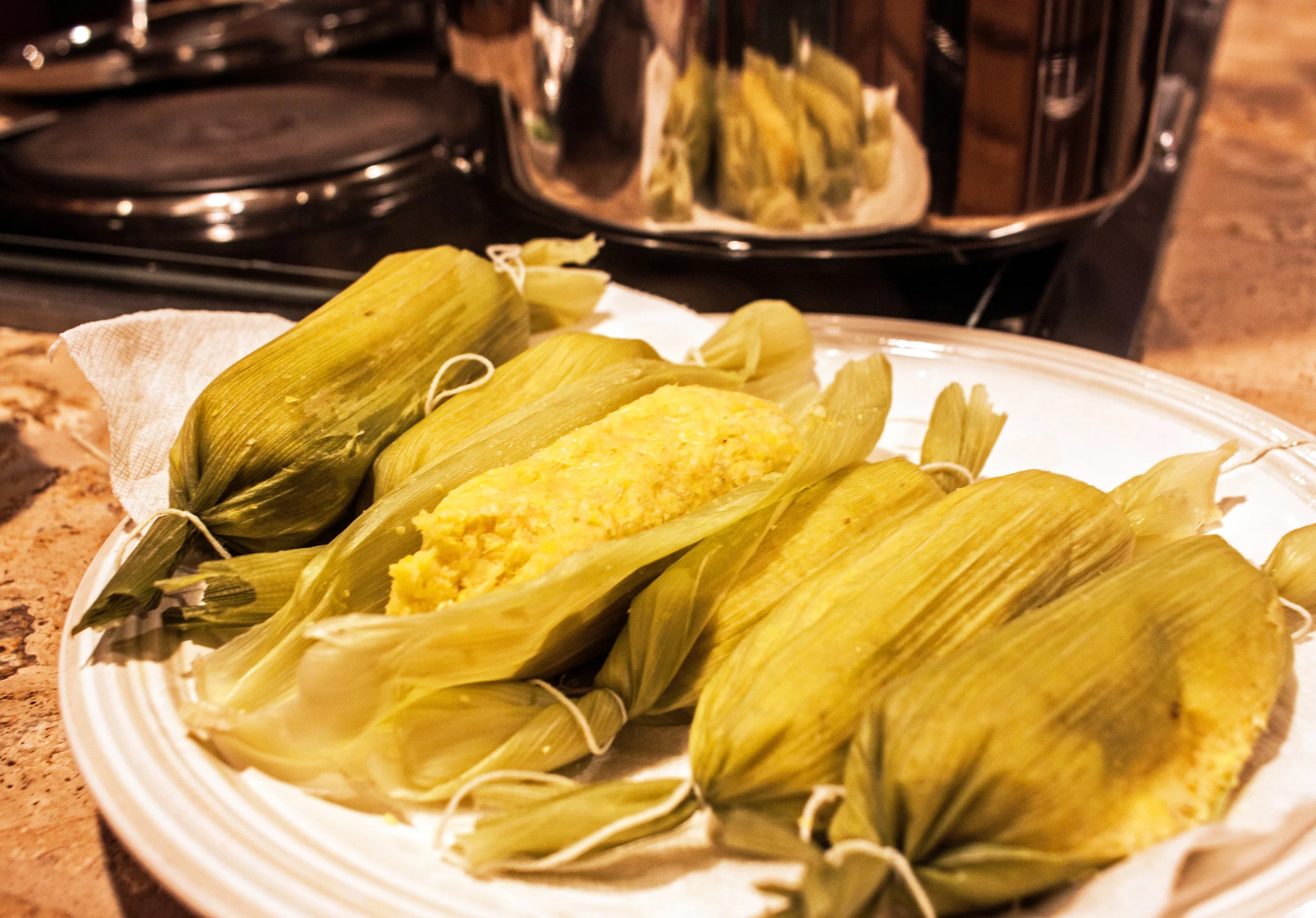
The finished bollos, ready to eat.
Patacones
Patacones are simply fried plantains. Traditionally they are made with plantains that are greener but I did not want these riper plantains to go to waste sitting at the grocery store for another day or two. I picked up four plantains - one for each member of my family. But with these served as a side to my mom's enchiladas we had plenty of leftover for the four of us.
The first time I had patacones was in Ecuador. I also had them when I traveled to Nicaragua and Honduras though there they are known as tostones. Here's how I made these patacones following Layla Pujol's instruction:
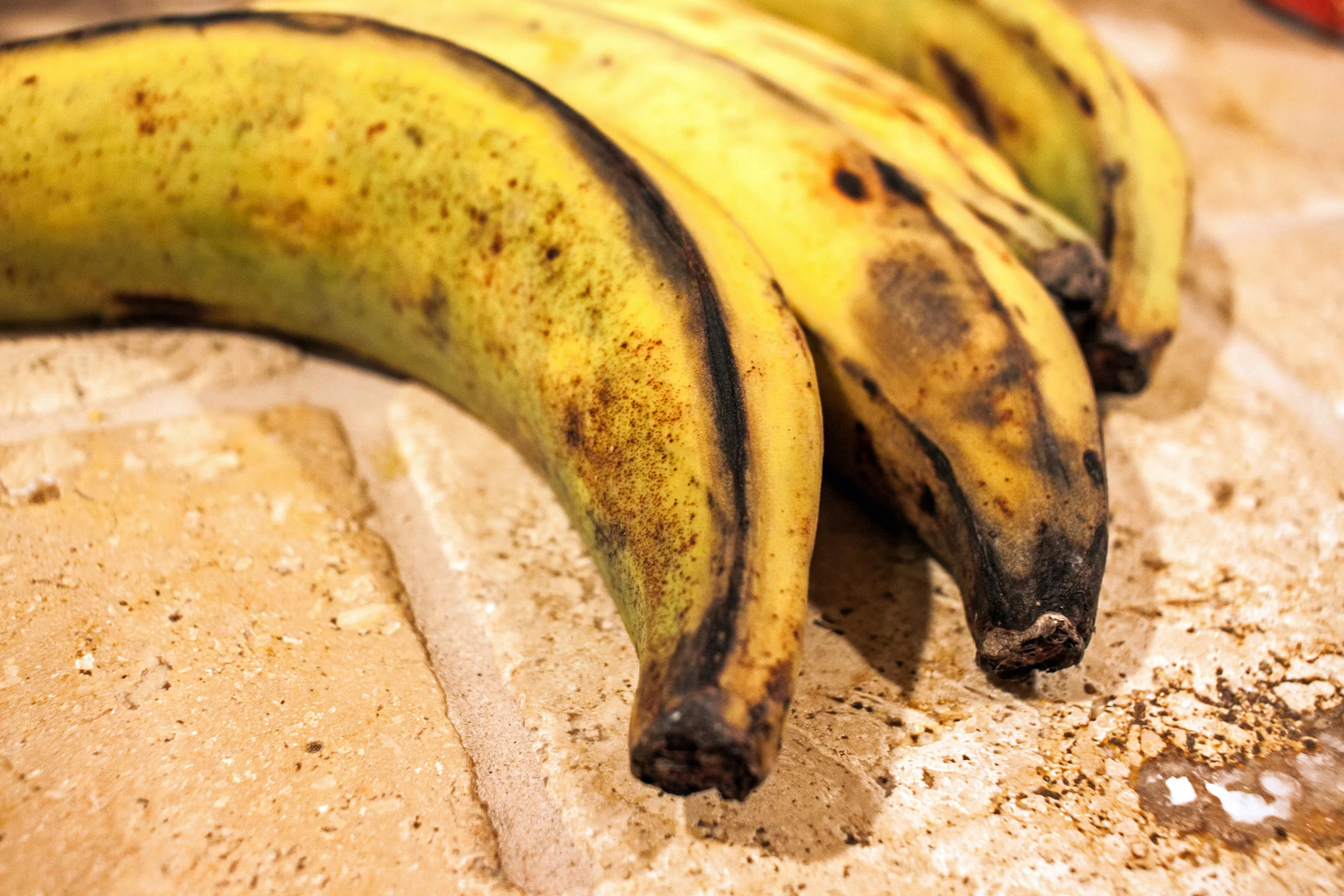
Plantains.
1. I started by peeling the plantains and cutting them into 1" slices (approximately). Note: apparently green plantains are difficult to peel; since the plantains I used were not as green, they were easy to peel.
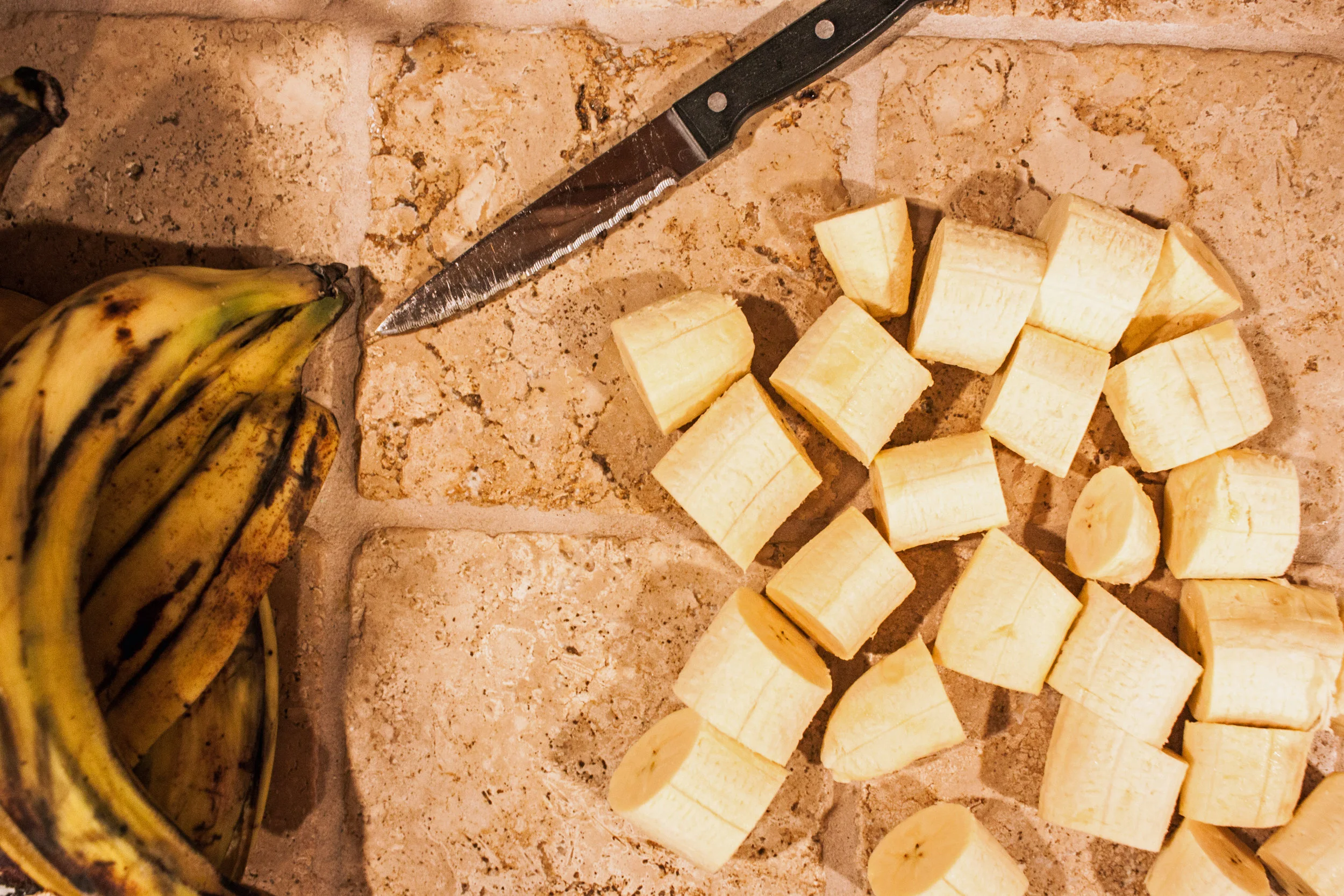
Cutting the plantains.
2. The next step was to fry the plantain slices. I chose to use avocado oil but any high heat cooking oil will do. Note: olive oil is a bad choice, it has a relatively low smoking point. Since I did not want to use so much oil (because it's expensive), I filled the pan with only half an inch of oil. I fried the plantains for three minutes, flipped them, and fried them for another three minutes.
My mom helped me with the rest of this recipe for the sake of efficiency. Not all of the plantain slices fit into the pan at once so while I did the second batch my mom moved on to the next step.
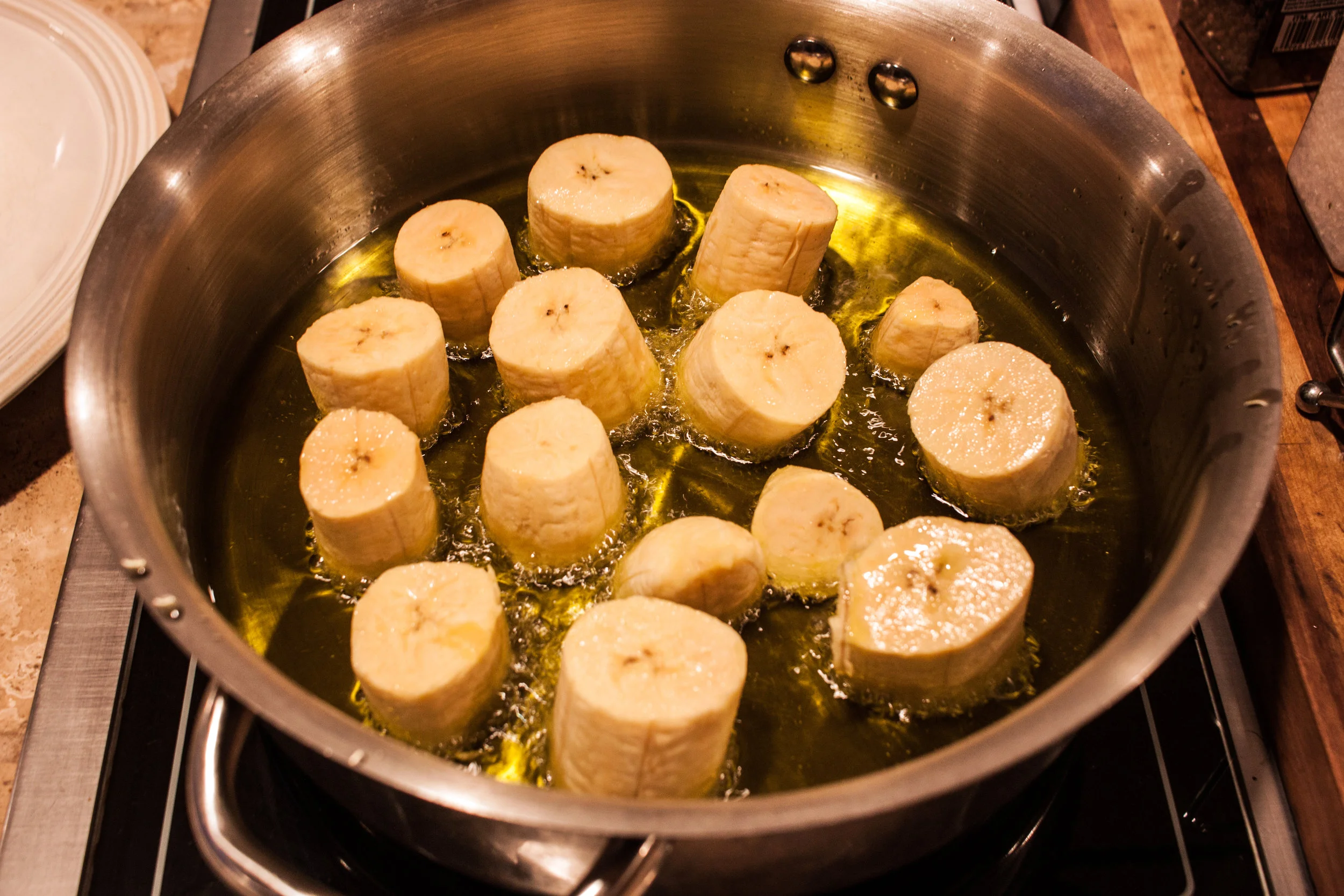
Frying the plantain slices for the first time.
3. The next step was to flatten the slices. My mom dried the fried slices with a paper towel, flattened them between two plates, and then laid them out on another paper towel to further dry off.
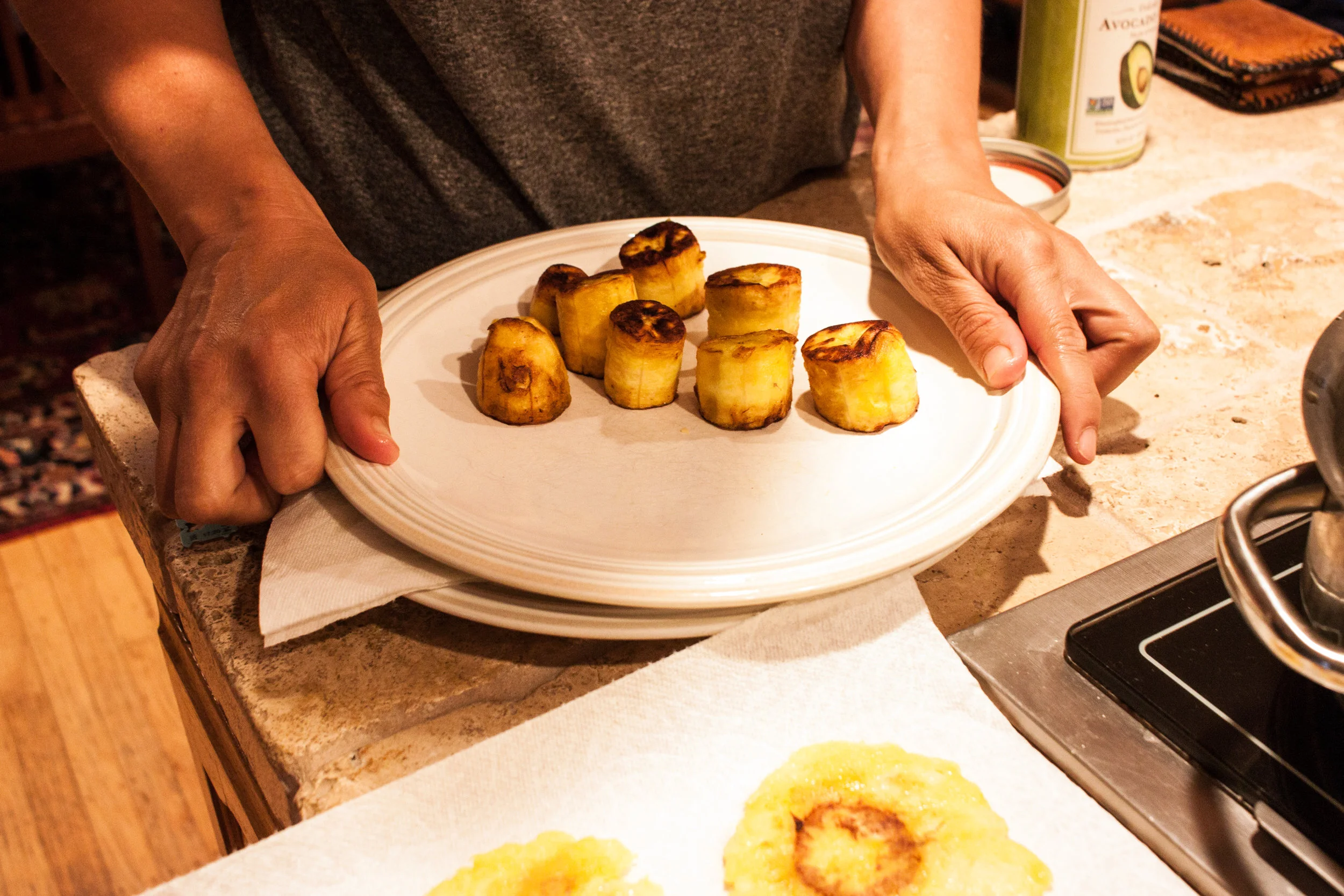
Flattening the fried plantain slices.
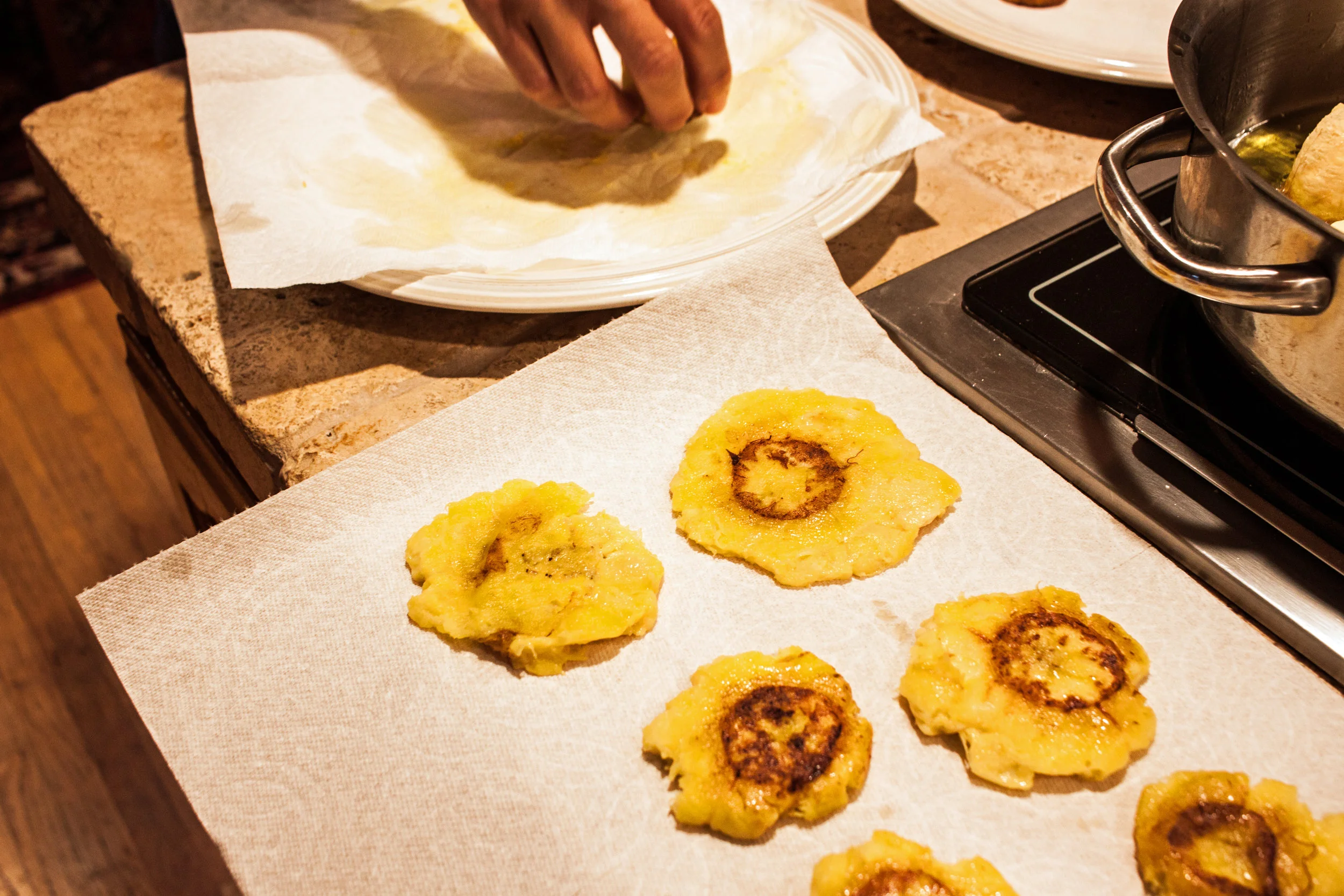
The flattened plantain slices.
4. Once I was done frying the plantains the first time, I started frying them the second time, after they had been flattened by my mom. I fried them for another 2-3 minutes on each side.
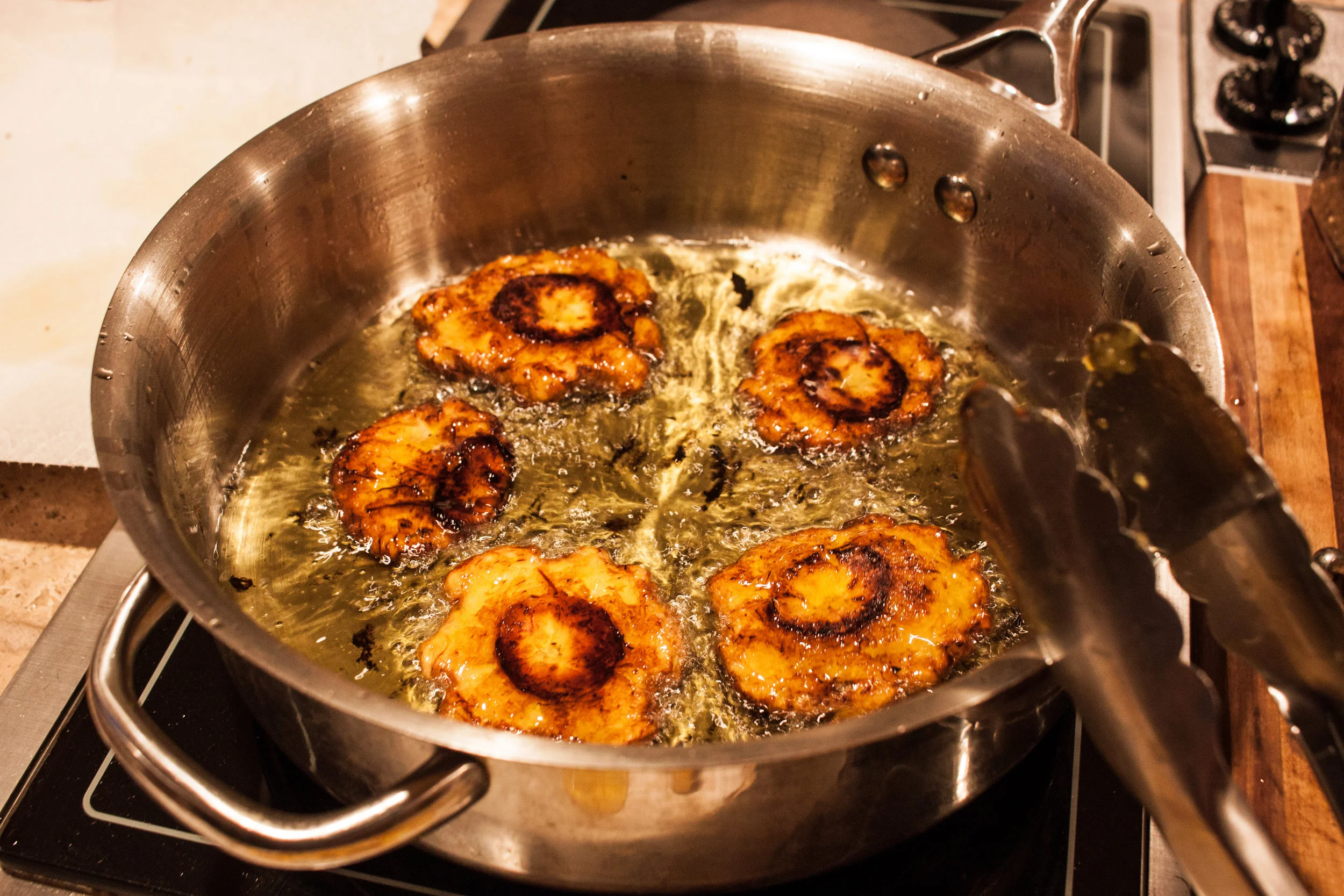
Frying the flattened plantain slices.
5. After frying, we dried them off with paper towels and sat them on a cooling rack until they were cooled enough to eat. Everyone loved them, especially the thinner ones that were extra crispy on the outside.
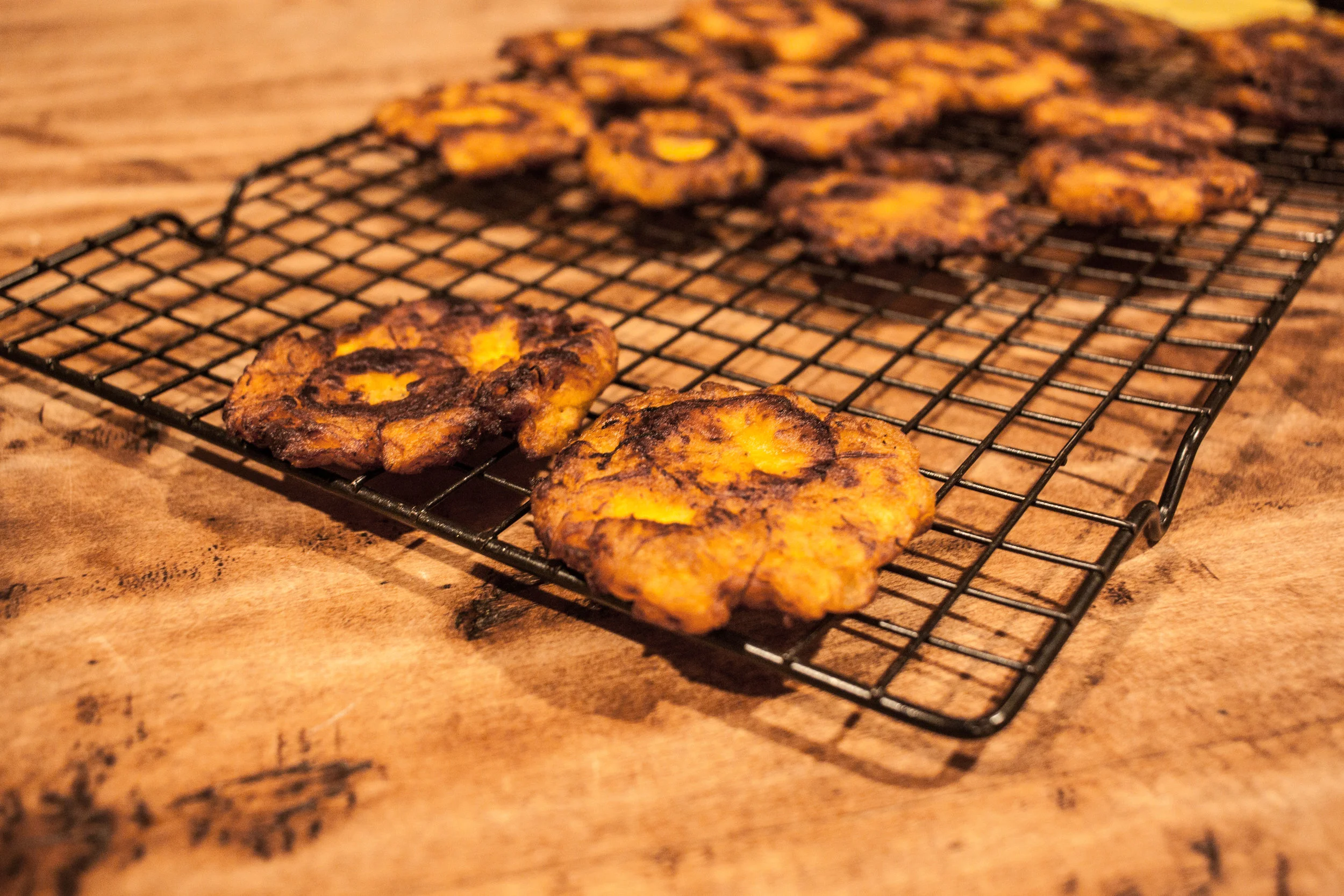
Finished patacones, ready to eat.
I am looking forward to eating many more bollos and patacones in Panama and am excited to learn how to cook more meals.