
A Life of Resilience, Strength, and Generosity
After spending even just a week in Samboa, one would realize that the adult population is majority female. On top of that, it would also be noticed that most of these women are single mothers - some fathers work elsewhere but still send money, some life partners are no longer with us in this world, and others, sadly, have packed up their things and left, never looking back at what they’ve left behind. That’s not to say that there are no men in Samboa, but the female population is much larger.
These women in Samboa, these Ngäbe women, are resilient. Most women here do not see themselves as resilient - as having the ability to withstand or recover quickly from difficult conditions - because to them, these “difficult conditions” are simply part of everyday life. To them, having no stable income, experiencing loss, hunger, and in some cases abuse, and being the sole provider for a family of five or more are all just part of everyday life. They may not realize it, but just their existence shows their resilience.
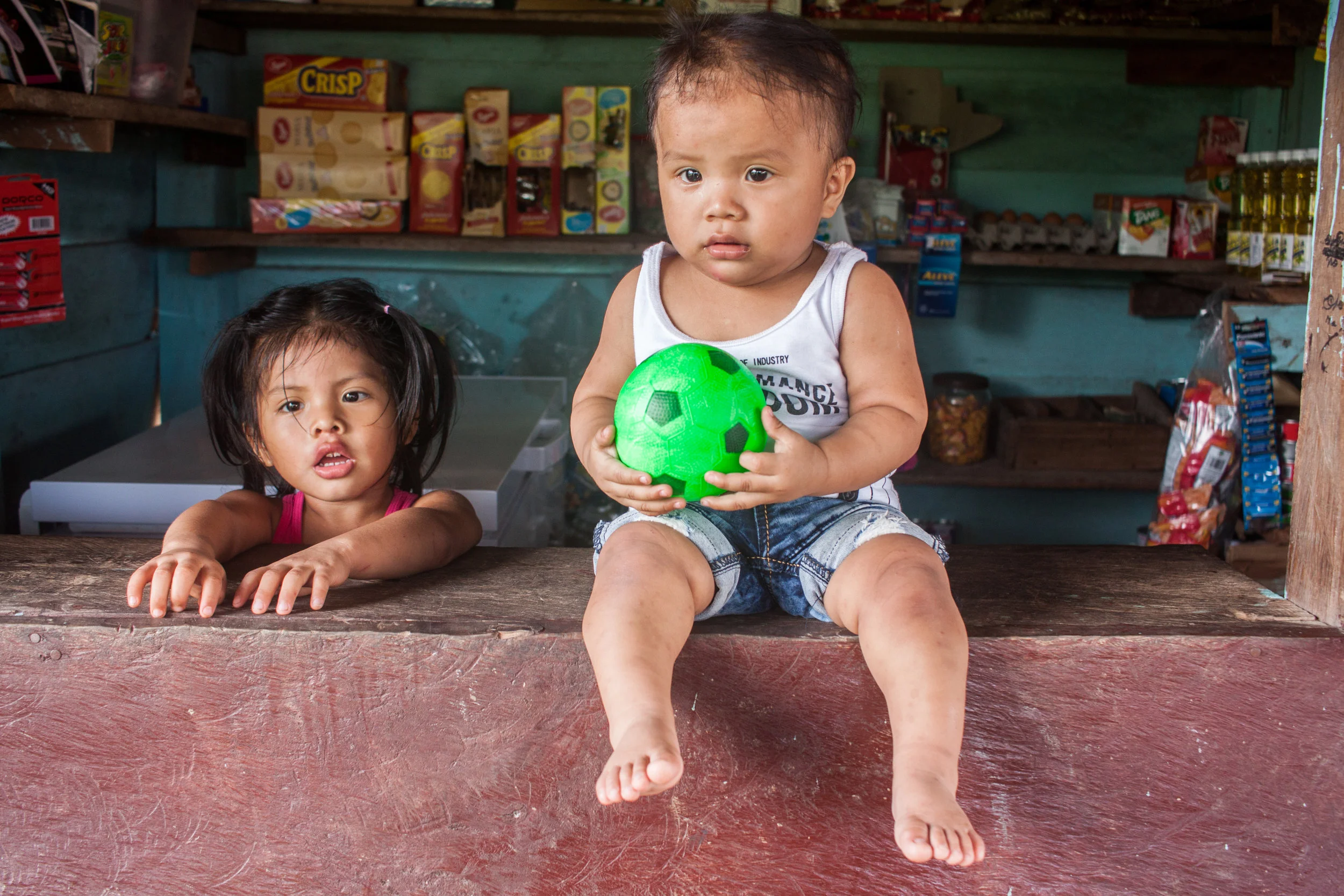
Graciela teaching her grandchildren how to run the family business - a tienda (store).
In a place with little to no economic opportunity, these women have created jobs for themselves. Women who know how to sew make school uniforms for students, pants and button downs for men, and nakwas (traditional dresses) for other women. Women who have invested in solar panels have created small businesses charging cell phones and other electronic devices. Women who have land have planted cash crops to sell - cacao, coffee, plátano, and ñame for example. And women who have been able to save up a little extra money have opened up tiendas (small stores). People who have degrees and access to more formal employment - people who don’t really know them - might classify these women as unemployed and reliant on government assistance. But the truth is quite the opposite - these women are hard-working, self-employed, and do everything within their means to provide a better future for their children and their children’s children.
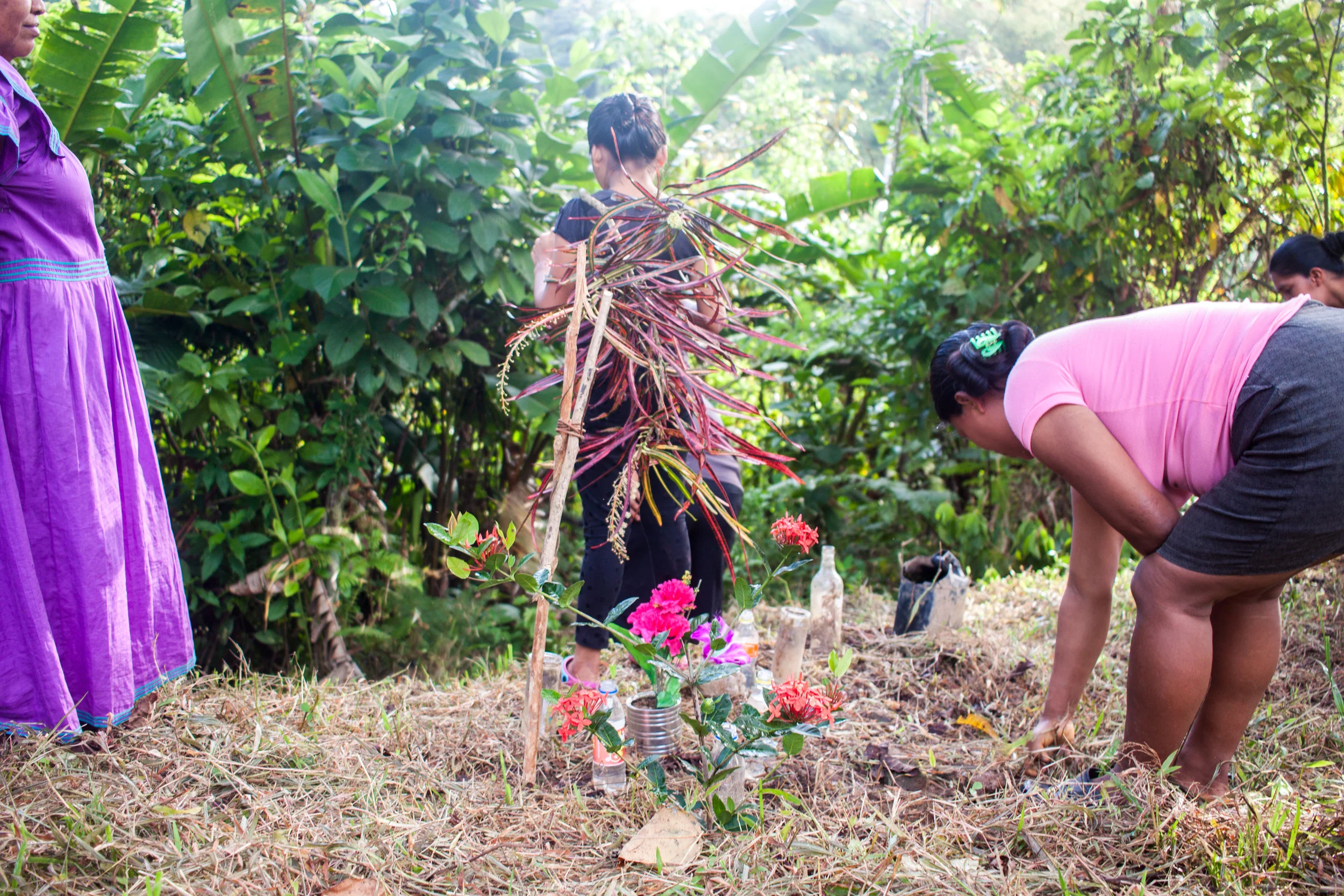
Women tending to graves of loved ones on Día del Disfunto (Day of the Deceased).
In a place with difficult access to medical care, many women have experienced the loss of at least one child, if not more. Some have lost sisters, brothers, and cousins knowing that ‘only the good die young’. Others have also experienced the loss of a husband and have had to become the sole providers for their families. Sometimes they walk hours to the nearest clinic or pay $30+ round trip to get to the doctor, but sometimes loss is inevitable. They grieve, as is expected, but they don’t outwardly show it for very long. They pick themselves up and, without complaint or hesitation, they keep moving forward; because that is what they must do. They still have work to do, people to take care of, and mouths to feed. Life doesn’t stop and they’ve had to learn that the hard way and usually from a young age.
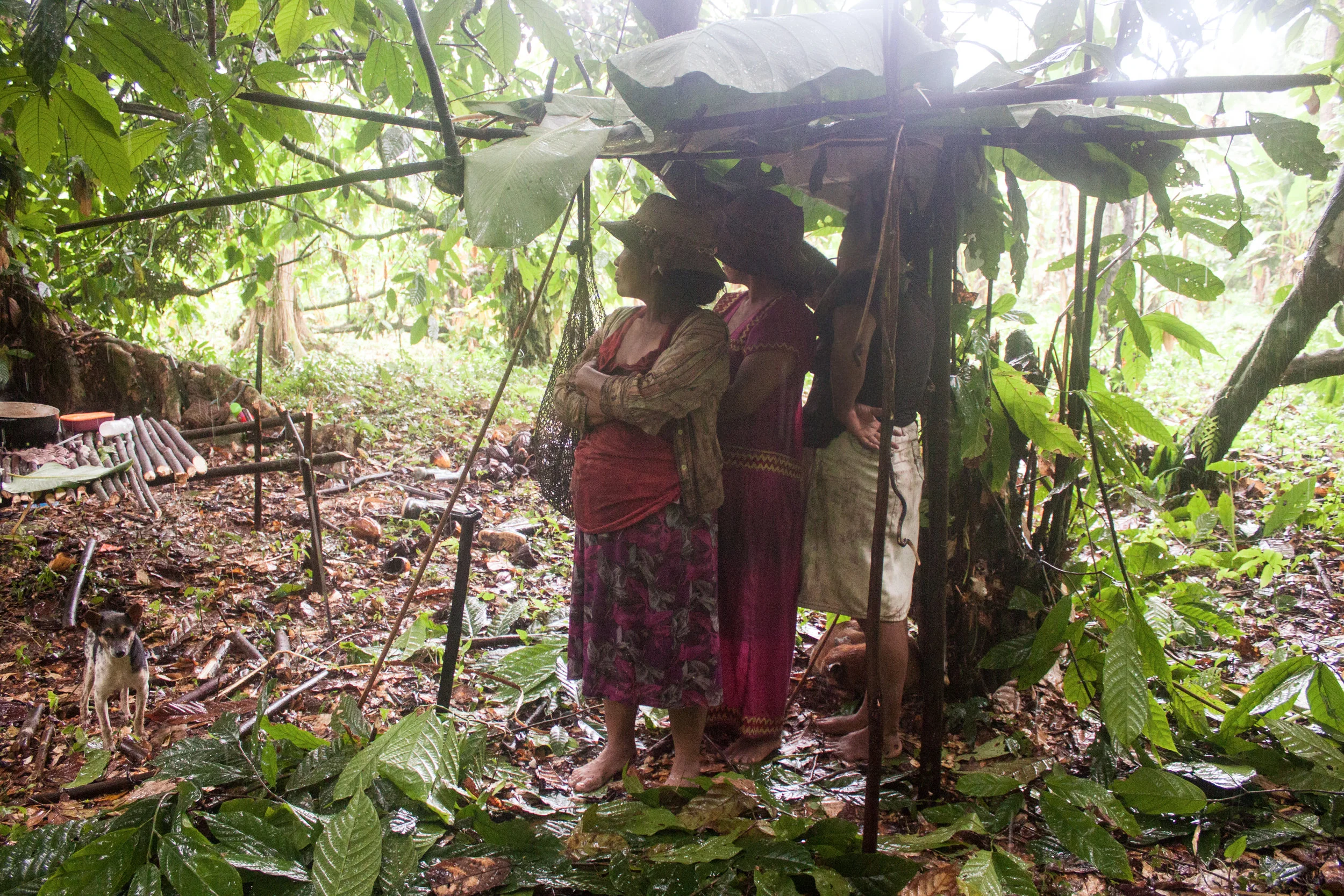
Female farmers waiting out the rain on a group work day.
In a place with heavy rainfalls, they have learned how to survive. They know not to cross the river or travel by boat if rain is on the horizon. They know how to walk through the mud without shoes, or in rubber boots without socks. They know what crops grow well in wet climates. They know how to make their food last longer when a storm has carried away most of what they had planted in the farm. They know how to start a fire for cooking over even when all of the firewood seems damp. And all of this knowledge they pass along to the next generation. They may not be growing tomatoes, carrots, or broccoli, but they have learned how to survive, and they are teaching their offspring how to do the same.
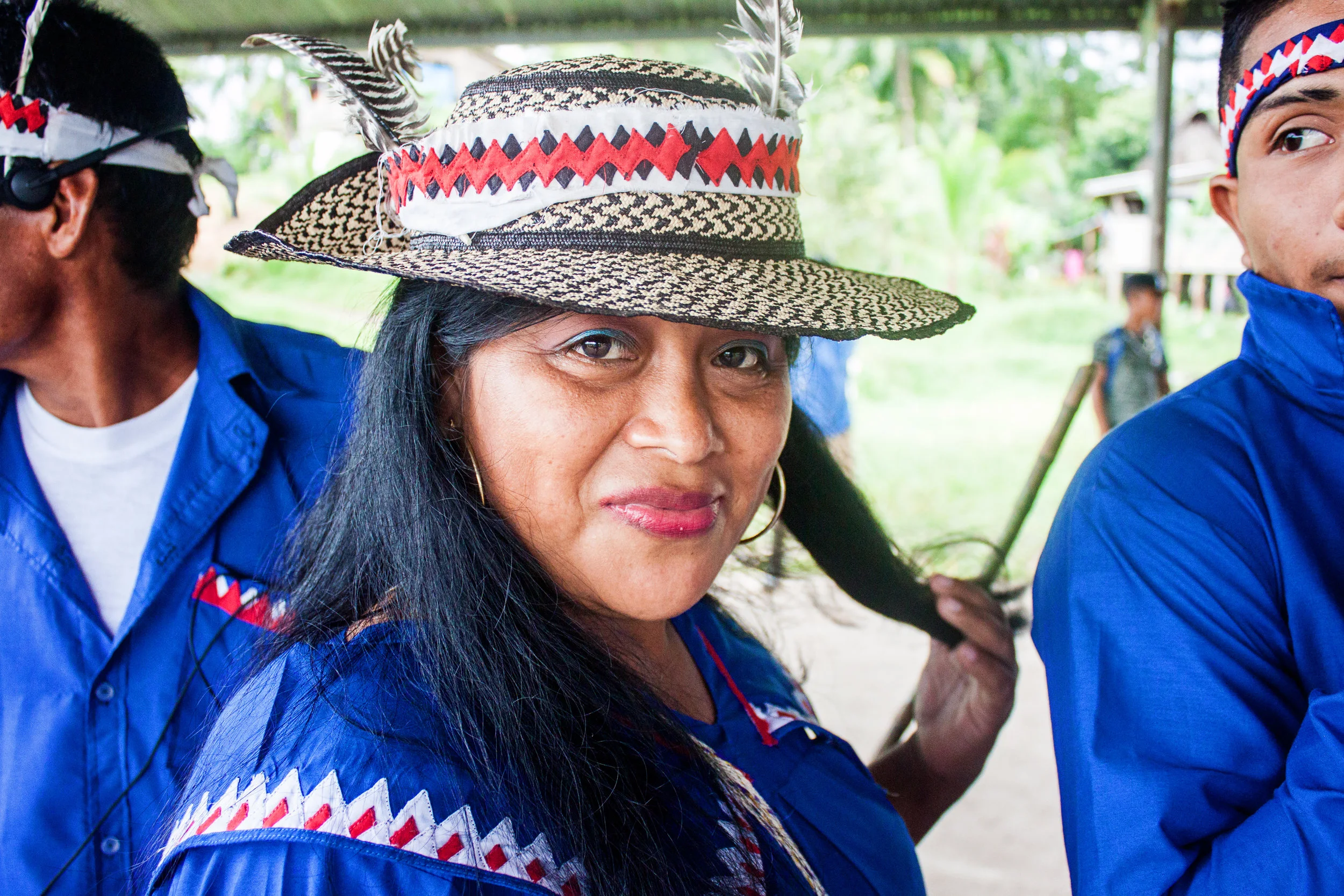
Meli participating in the schools annual Día de Danza (Day of Dance) - celebrating Ngäbe culture and tradition.
In a place that has seen its share of colonization, they have continued to educate their children about Ngäbe culture and traditions. Boys learn how to navigate the rivers in dugout canoes. Girls learn how to process and weave pita into bags. Toddlers learn how to speak and understand their mother tongue and when they get a little older they learn how to dance like Ngäbes. Both boys and girls learn how to work in the farm and hunt for shrimp in the streams. Women pass on myths, taboos, sayings, and stories of a time before them so that their children will have a sense of who they are and where they come from. These women are resilient and they are teaching the next generation how to be resilient as well.
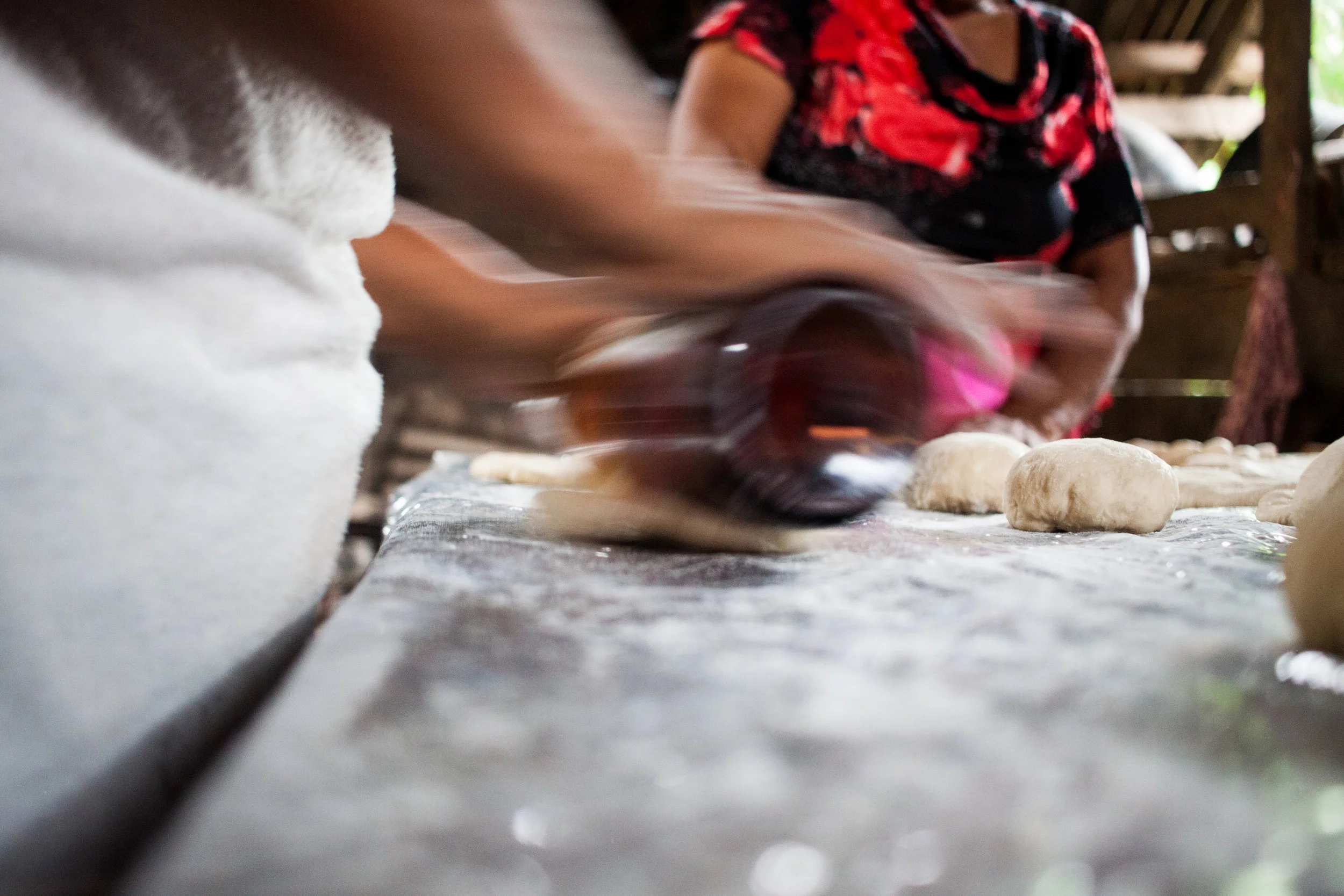
Sisters baking bread - both to eat and to sell.
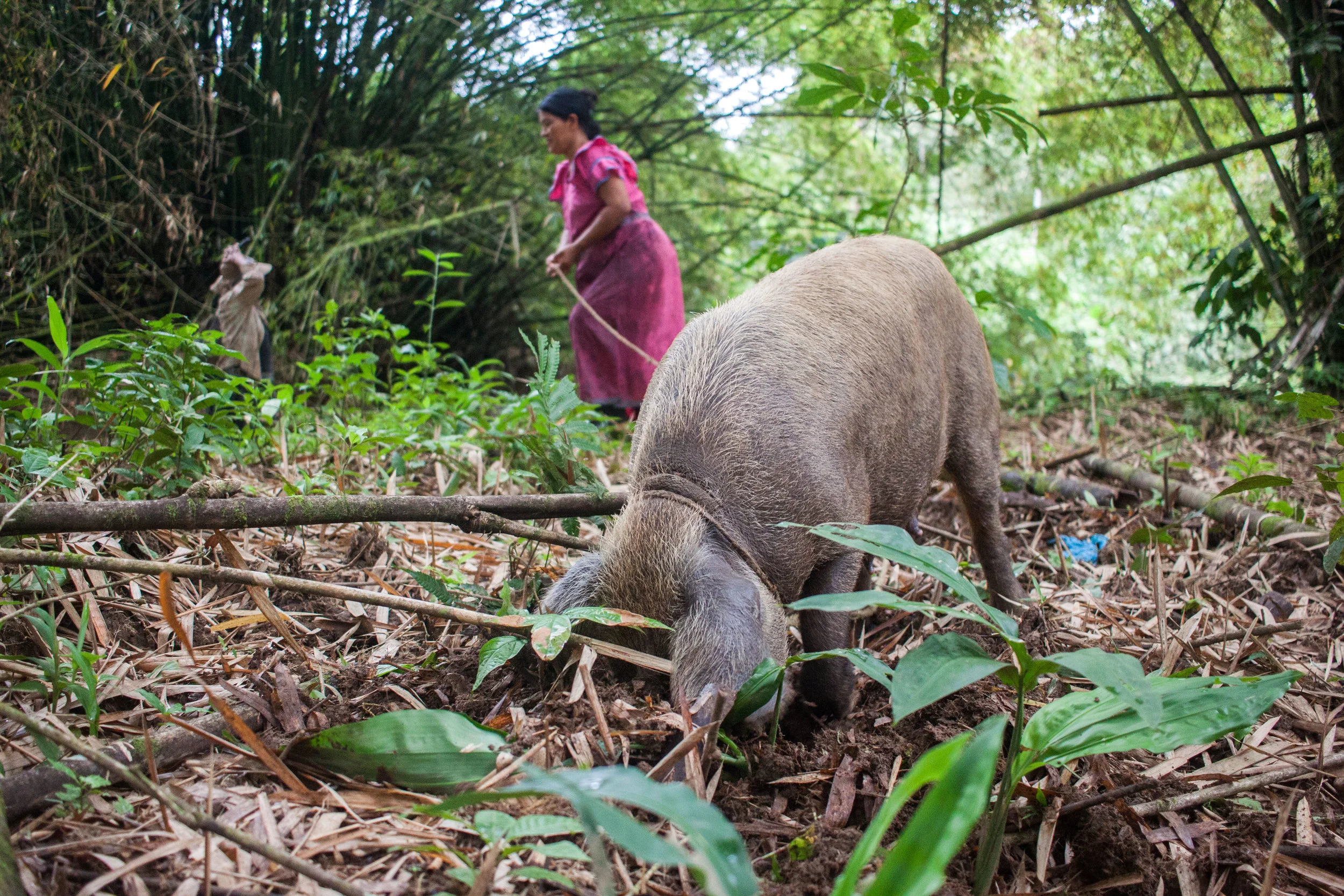
Telma walking the family pig for exercise.
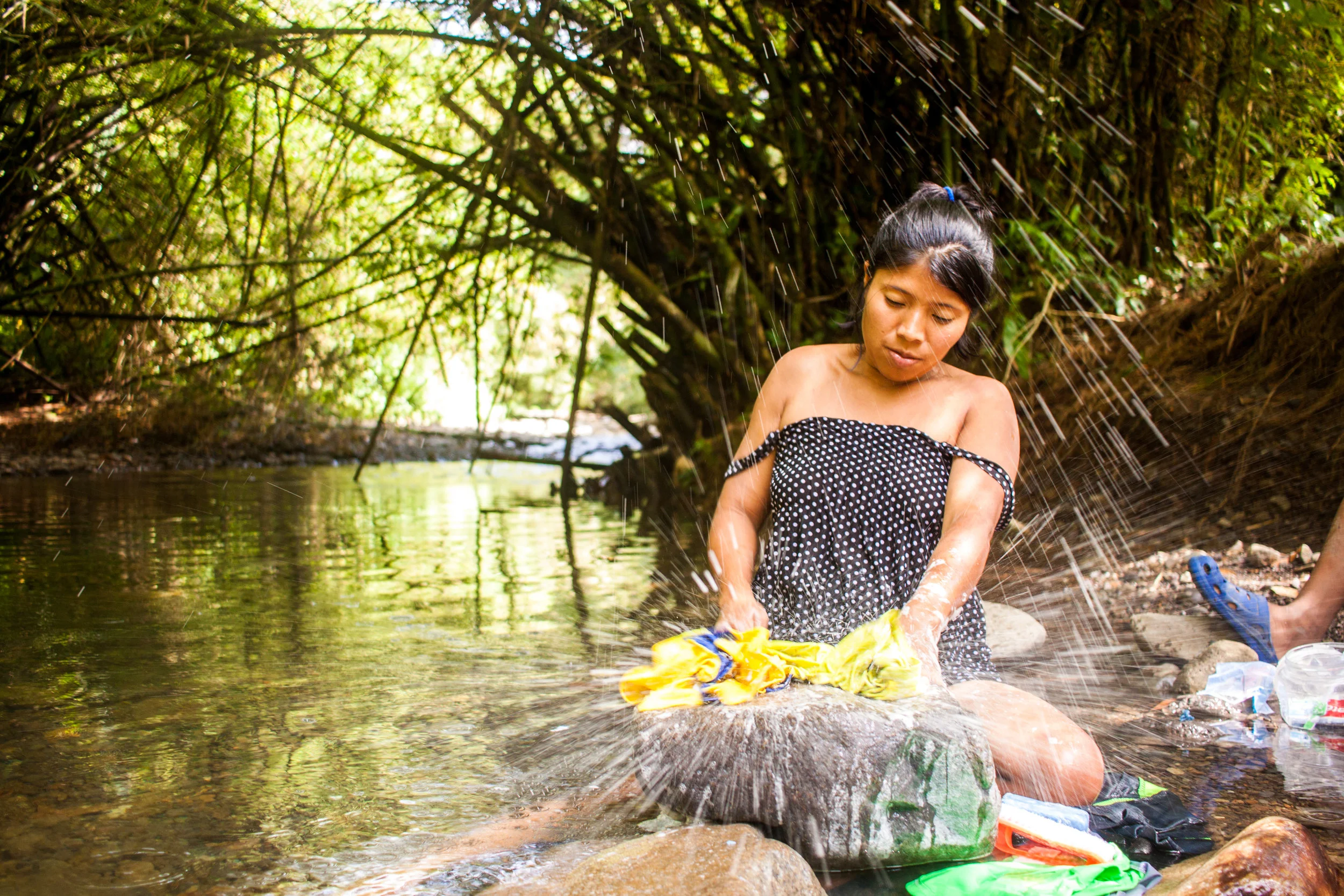
Raquela washing the family’s clothes in the river.
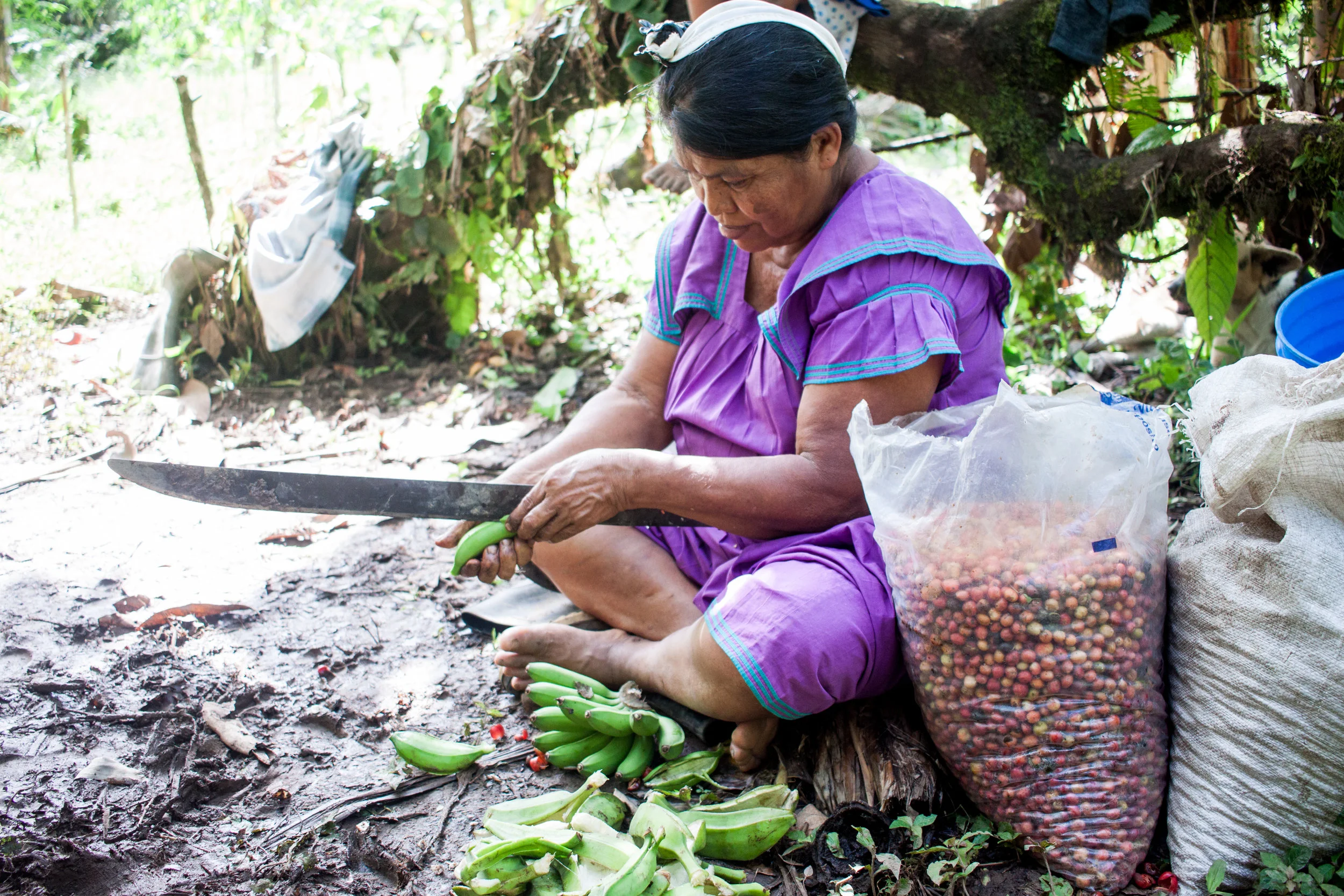
Nola peeling bananas for lunch in the farm.
These women in Samboa, these Ngäbe women, are not only resilient, they are strong. They spend the majority of each day providing for their families - for their children, their grandchildren, and in some cases their great grandchildren. Every day they can be seen cooking, cleaning in and around the house, taking care of the chickens and pigs, and washing clothes and dishes in the river. When the water goes out, they carry water from the river or a neighboring house. When there is no more food in the house, they go to the farm – sometimes 45 minutes away – and carry back as much as they can. The amount of time they can last working in the farm in the heat and humidity is incredible. And the amount that these women can carry, it’s truly unbelievable. I get tired after 15 minutes, take at least 10 water breaks, and only carry a fraction of their loads. Their bags, which they strap on to their heads and rest against their backs, are sometimes so heavy that they need assistance putting it on; it weighs more than I can lift alone. The best way to describe it to someone who hasn’t seen them work before is that these women are true superheroes with actual superhuman strength.
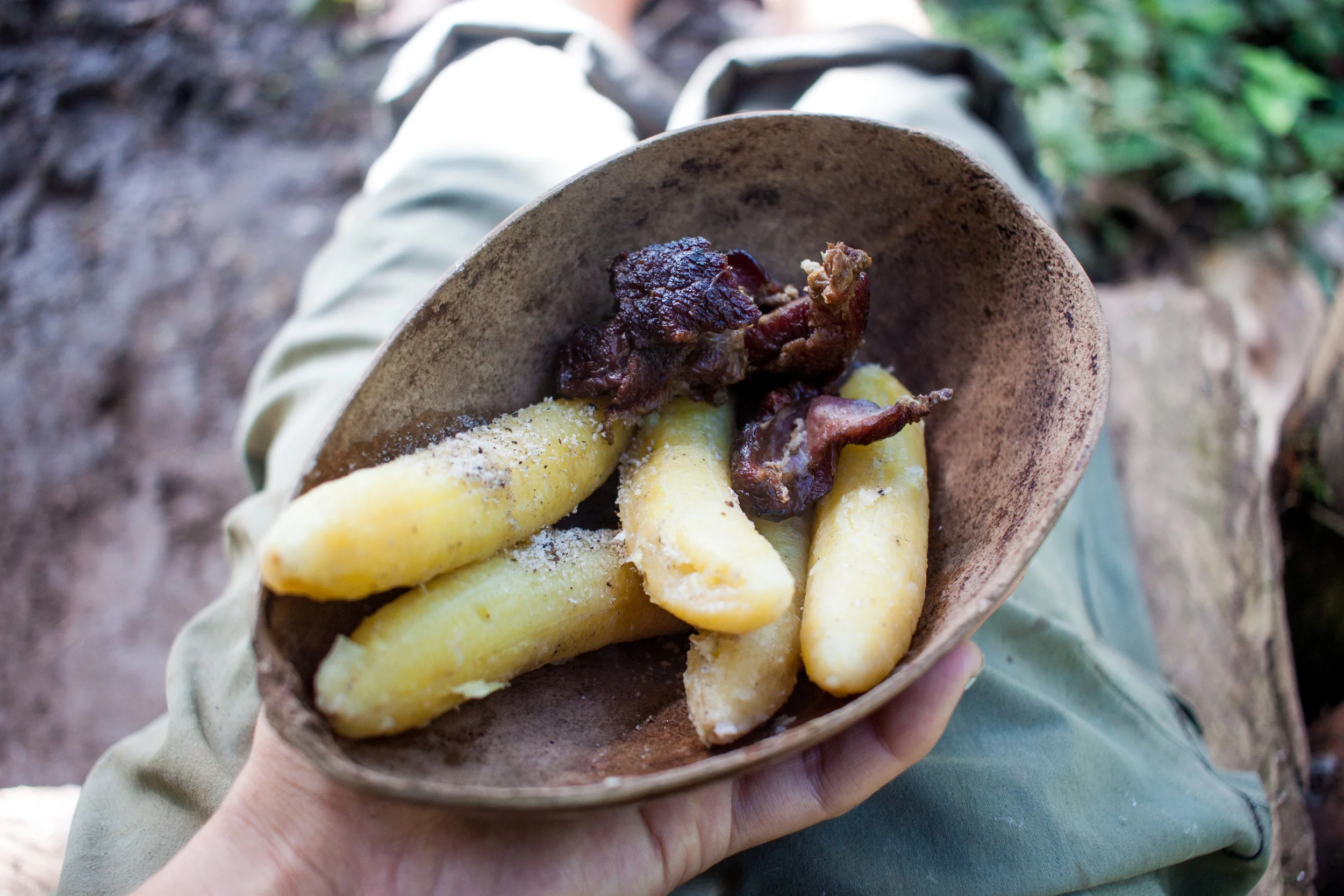
Lunch offered to me after helping someone in the farm. The boiled green bananas are very typical but the meat is a special treat.
These women in Samboa, these Ngäbe women, are generous. Even if they have only a couple of handmade pieces of furniture, they will always offer you the best seat (or hammock) in the house. Even if they have no running water in the house, they will always offer you a sugary drink to quench your thirst. And even if they have no food around, they will always find something and offer you a bite to eat. They loan things to their neighbors knowing they may never get them back. They share their harvest and seeds with those who offer to the smallest amount of help in the farm. They may not have a lot of disposable income or material possessions but they will always offer, to anyone, even a stranger, what they can.
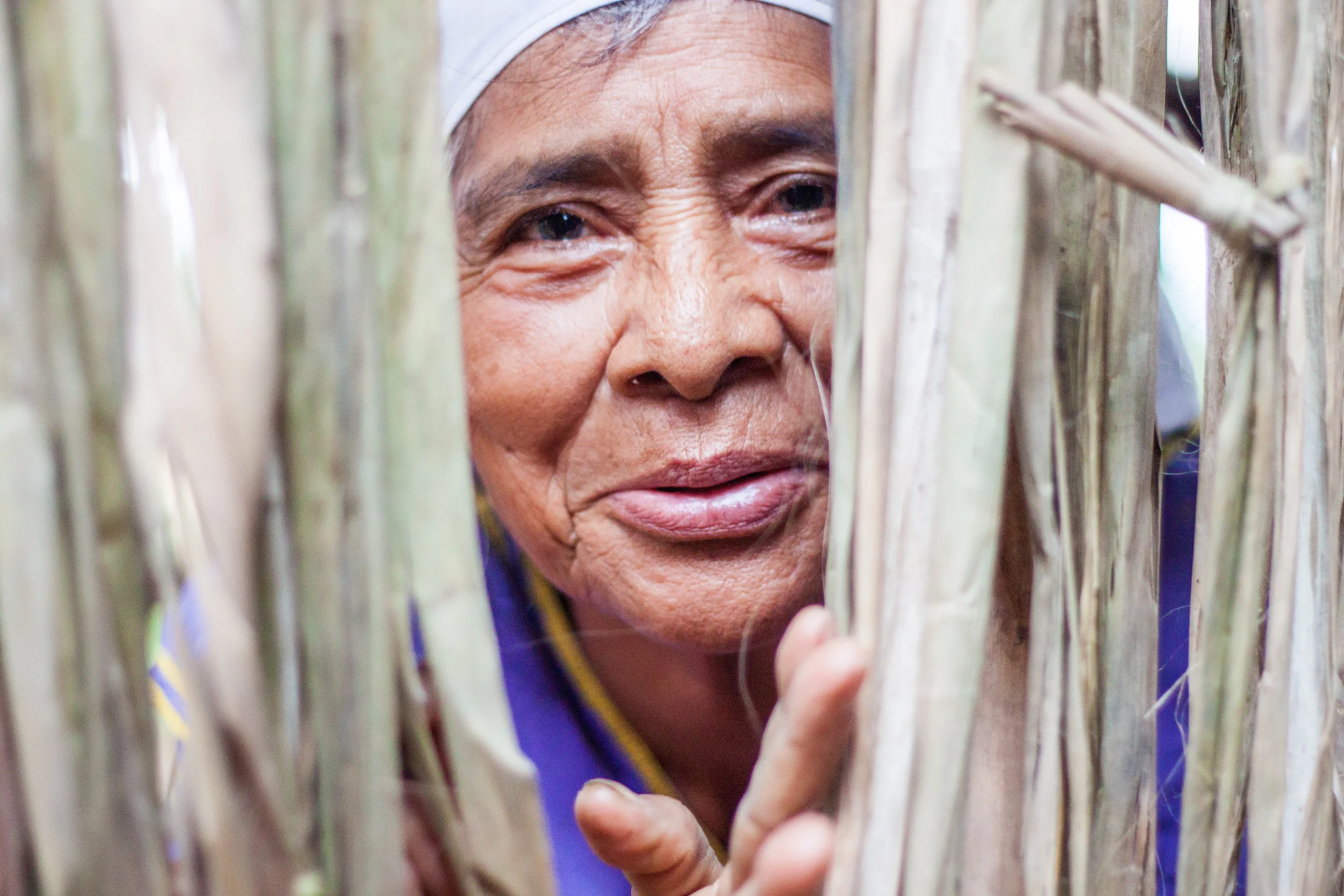
My favorite abuela (grandma) who loves to get her photo taken and loves to joke, play, and laugh.
These women in Samboa, these Ngäbe women, live a life of resilience, strength, and generosity that impresses and inspires me every day. They are by no means perfect – they have their flaws and I do not agree with everything they do or say – but their existence in a world that seems to be working against them is amazing. The picture I’ve painted may make you think that these women live a horrible and depressing life, but the truth is they are some of the happiest people I’ve met. Some have even moved back to Samboa after spending several years in a city because they prefer their more independent lifestyles. Their days are filled with jokes, stories, smiles, and laughter shared among loved ones. They are proud of where they come from and the lives they have created for themselves and their decedents – a life of self-reliance and autonomy. And on top of it all, they are grateful for not only the things they have in their lives but also the people. These women in Samboa, these Ngäbe women, are playful, comedic, proud, full of character, bright, and grateful among other things.
These women are some of the beautiful people I have met. They don’t always receive the praise and respect that they deserve, but my hope is that one day they will.
*Note: This was not written to generalize all Panamanian women, nor all Ngäbe women. This was written from content collected through my relationships with various women living in Samboa.