
Coffee: From the Finca to the Fogón
One of my major projects over the next two years involves working with coffe farmers to improve sustainable coffee production and to find or create viable markets to sell to. Coming from the US - the world's biggest consumer of coffee - it has been interesting to learn about the actual plant and what it takes to make that familiar beverage that so many people wake up to every morning. Before coming here I had no idea where coffee came from. Is it an annual plant? A bush? A tree? Does in grow in pods like beans? I had no reason to ever think about it before. But now I know: coffee comes from trees and the beans themselves are surrounded by sweet red cherries (not like maraschino cherries but a cherry nonetheless).
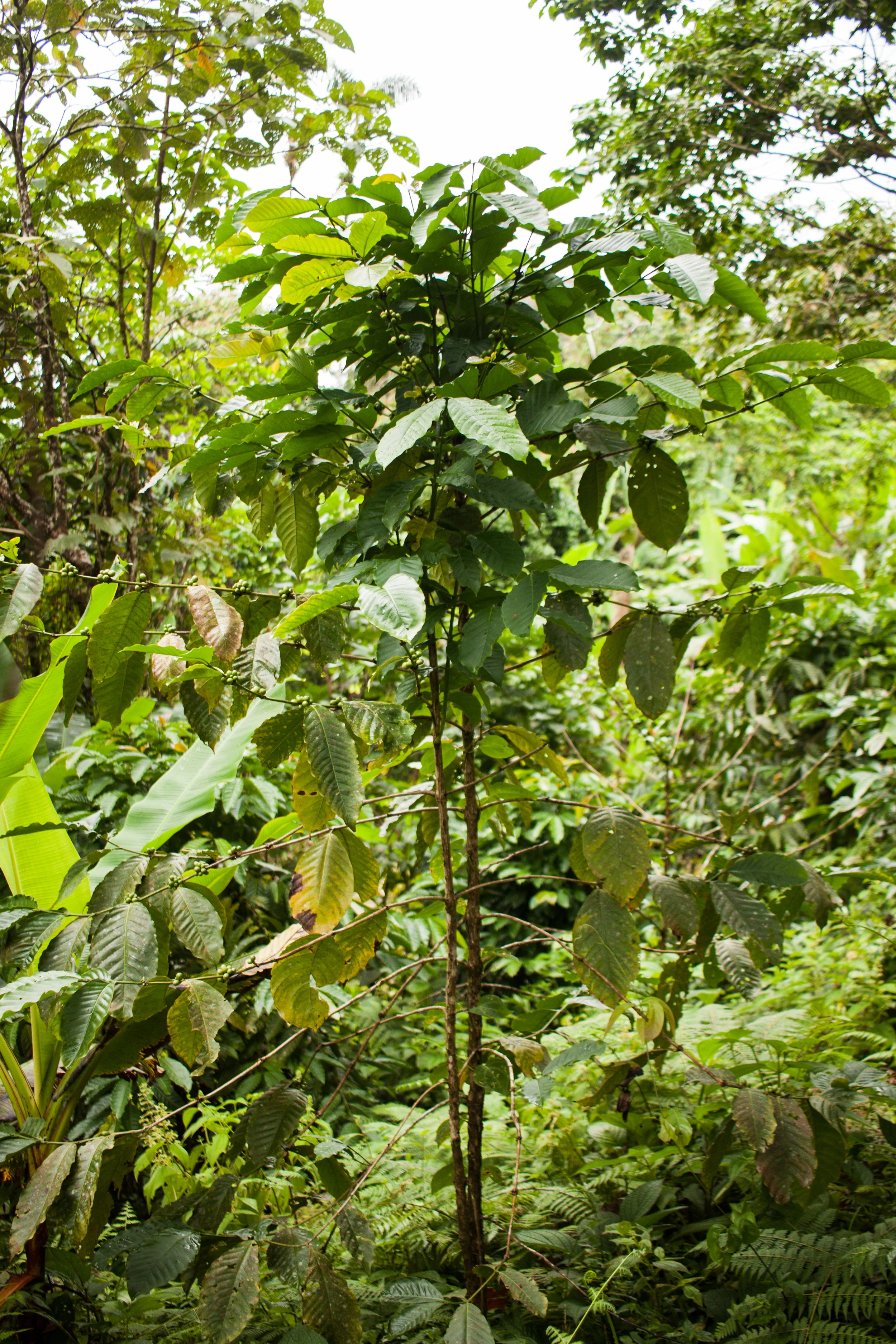
Coffee tree with unripe green cherries.
When the cherries are bright red they are ready to be harvested. Right now is the season of the cosecha (harvest) and so far I have been to a few farms to help out. Each farmer has their own method for harvesting: some farmers use a mix of saccos (old rice sacks) to collect the ripe coffee cherries; other farmers have been able to afford a basket specifically for coffee harvesting - imagine a circular laundry basket but with a bite taken out of it and a belt attached to fit perfectly above the hips. But regardless of the tools used, one theme is constant: it is always a family or group affair.
The coffee cherries grow in clusters, making them fairly easy to harvest when all the cherries are ripe. Some of the trees that have grown too tall require one person to bend the tree over while the others harvest as quickly as possible - not recommended but commonly practiced, ideally the trees would be pruned before getting so tall. But the real problem with the harvest is the ants. All ants in Panama bite, and sometimes the ants decide to build homes right in the cluster of cherries. Without gloves and long sleeves, one bad bunch could leave you with 10 burning bites.
Once the harvest is done the cherries are hauled back to the house in kra (traditional Ngäbe bags that are carried against the back with a strap over the head). Once back at the house the coffee cherries can be processed in a variety of ways: they can be dried first and then peeled later; de-pulped first, dried, and then peeled; or fermented, de-pulped, washed, dried, and then peeled. I am still learning what method works best
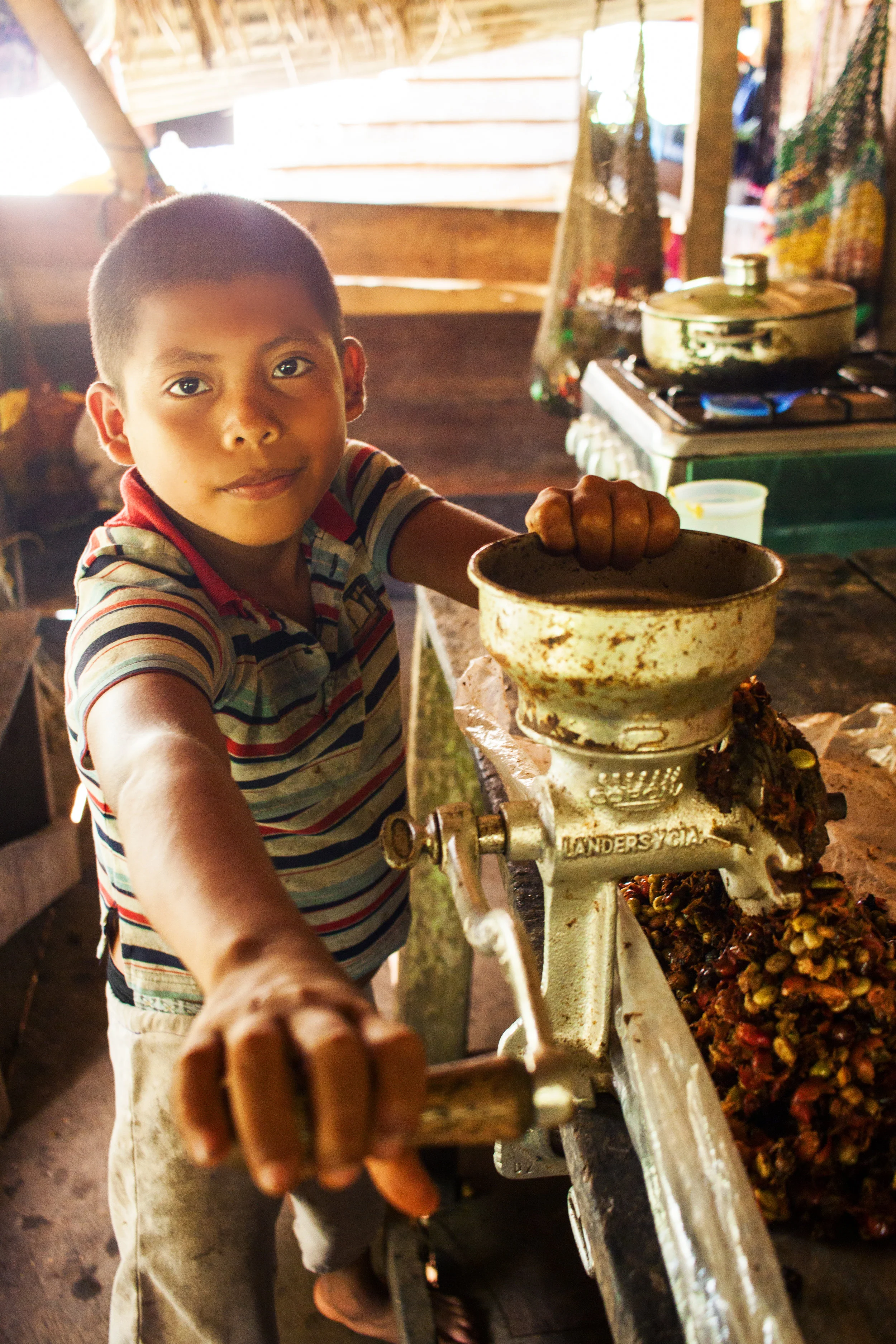
De-pulping fresh-picked coffee cherries.
Once the coffee is processed and dried it is ready to be roasted. The coffee is roasted in large batches in a paila (large metal cooking dish) over the fogón (wood-burning stove). It is stirred continuously, sometimes for over 30 minutes, with a large wooden spoon.
Most people here have to de-pulp and peel the cherries by hand. There are special machines that can be used process coffee much quicker but they can cost $500+ each, and that's not even including a motor, generator, and gas. One of our goals as a coffee group is to raise enough money to buy communal machines that everyone can use. In the meantime, some innovative people have begun using their hand grinders to de-pulp their coffee cherries (usually used to grind coffee, cacao, corn, etc.)
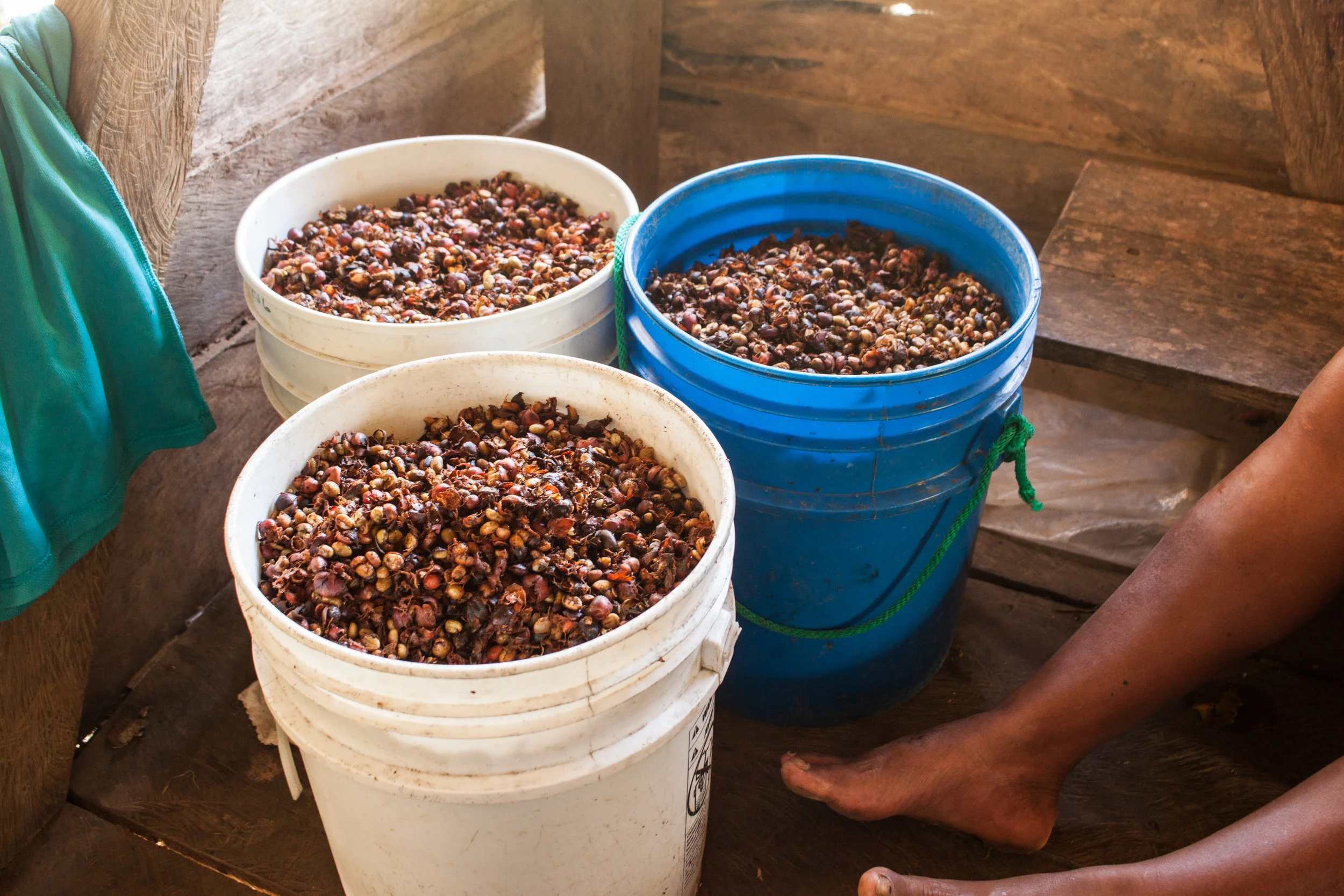
Coffee that's been washed and ready to be put in the sun to dry.
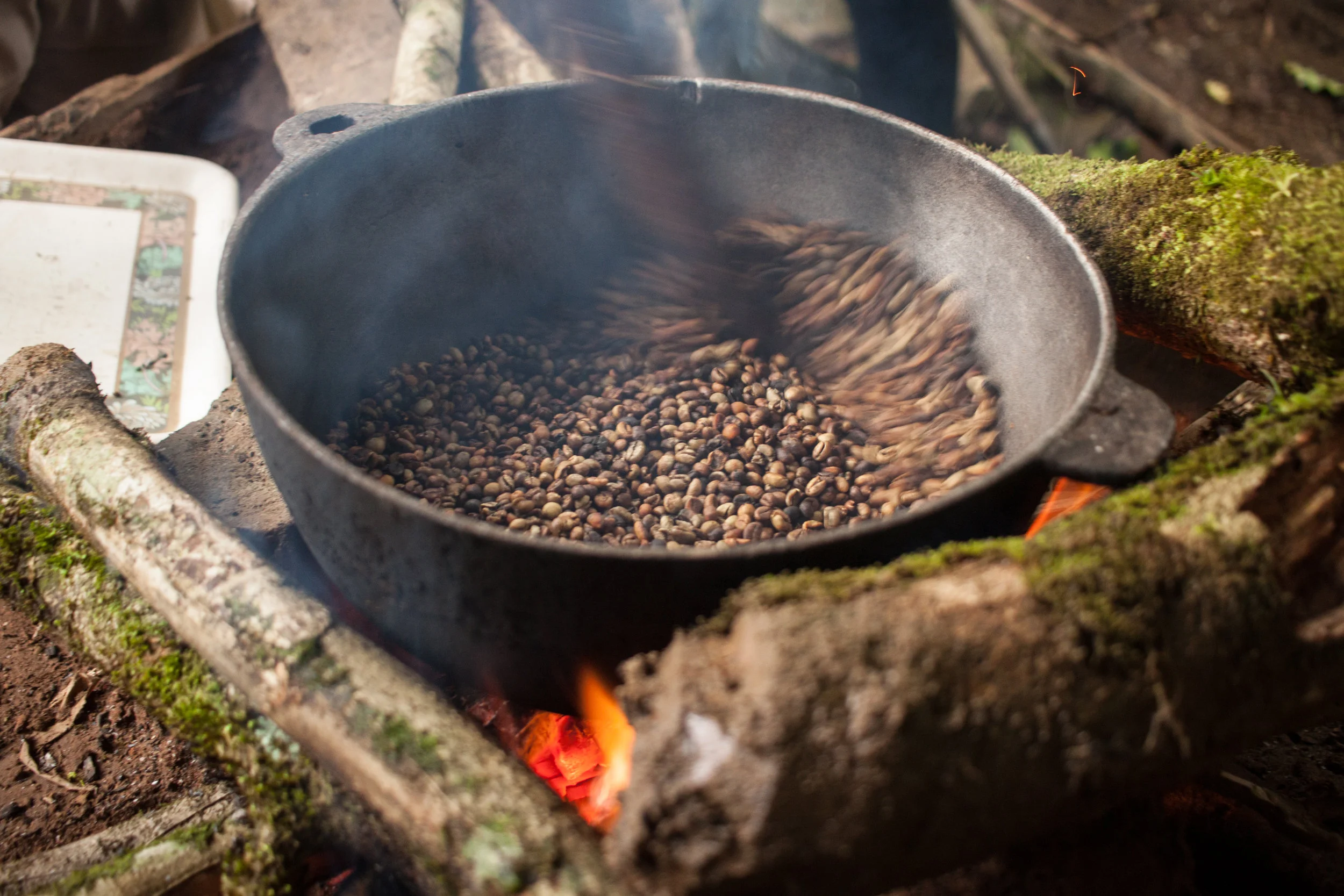
Toasting dried coffee beans in a paila over the fire.
Being the coffee stirrer is not the best job. There is a lot of smoke and it burns the eyes and the lungs. Some women have even told me that they think their eyesight is worsening because of all the smoke from their daily lives. Another project that would greatly benefit the group is having a communal eco-stove - a stove the emits less smoke and uses less leña (firewood).
Ideally the coffee is taken off the heat right when all the beans have lost their golden color. But here we make campo (country) coffee. Here the coffee is burnt to a dark black crips. But the way they drink coffee here - watered down and loaded with sugar - the flavor of the coffee does not matter so much.
Once the coffee is toasted it is ready to be ground and packaged. Not everyone does this last step - the packaging is only for those who are interested in selling. This is something that only a couple of people currently do but I am hoping that everyone in the group can learn how to do it. Most people in my community have at least a few coffee trees but the majority of those people only use the coffee for personal consumption. I will be working with over 30 farmers from 3 different communities who have enough coffee to sell. Right now the processed coffee is sold locally - within the community or to neighboring communities - and the untoasted beans or dried cherries can be sold outside of the communities to larger cooperatives or businesses. I still need to crunch the numbers, but I personally think they make more money packaging and selling locally, though it is a little more work.
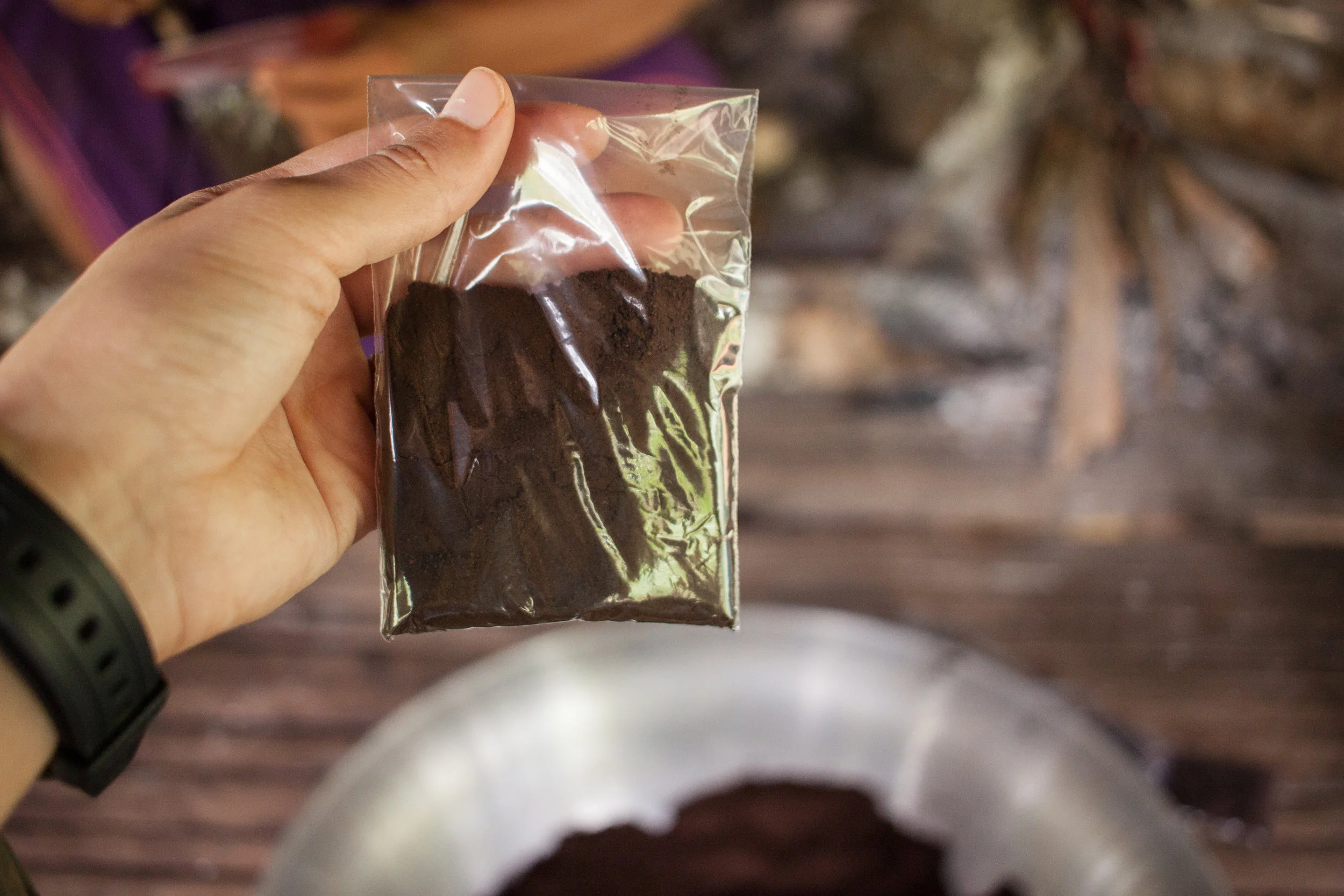
Bag of fresh-ground coffee.
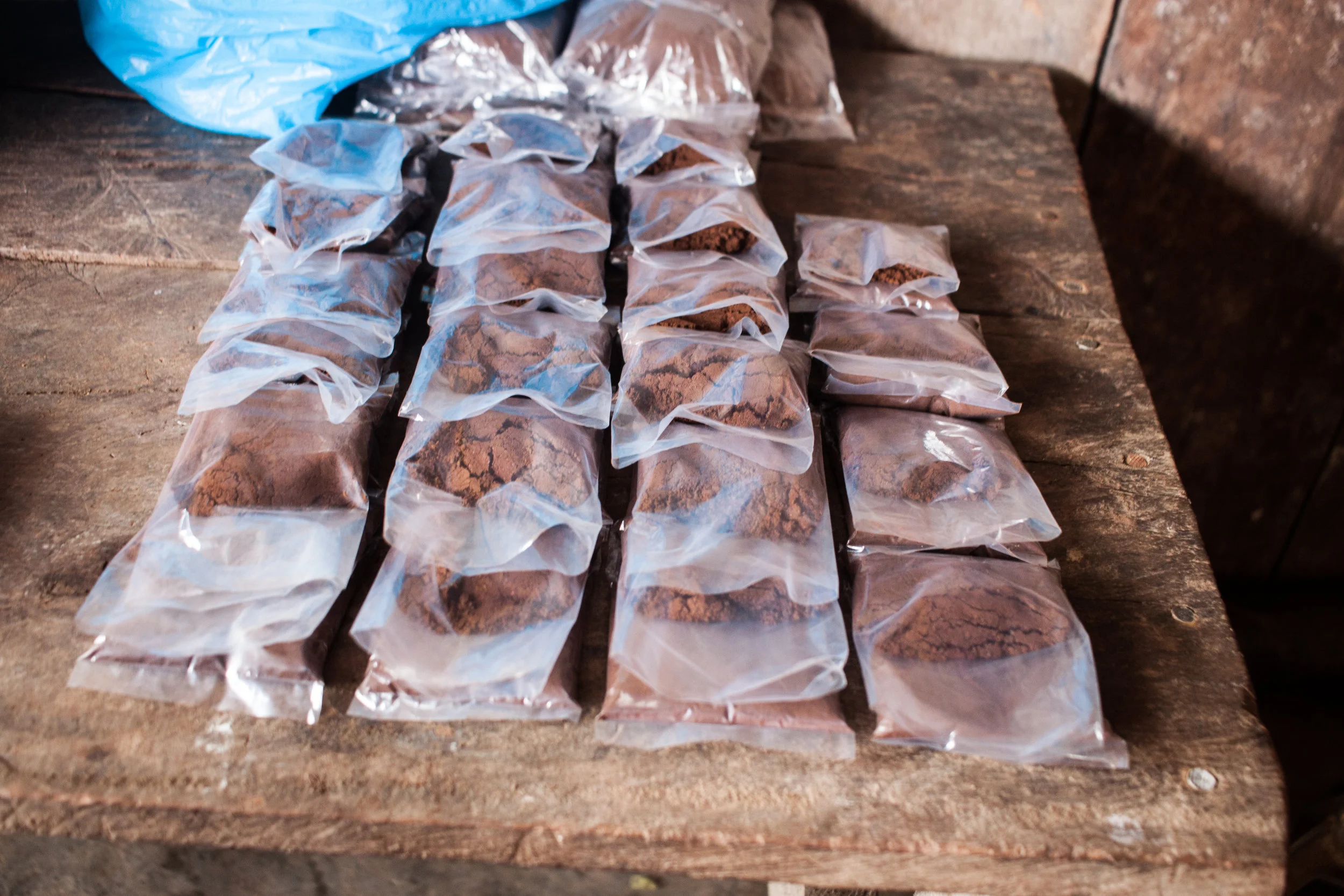
Bags of ground coffee ready to be sealed.
Grinding the coffee is no easy task. It is easier to grind while the beans are still hot but even then it can take hours of work to grind it by hand to a nice fine powder - especially on the unsteady wooden tables. Usually one or two people have to sit on the table to hold it down while the other person turns the crank as hard as possible.
Once the coffee is ground it is spooned into plastic baggies. We have no scales so, for now, it is all just eye-balled. The bags are sealed by pressing a hot knife against a plastic comb. Sometimes the knife is too hot and melts too much of the plastic and sometimes it doesn't melt enough and some coffe falls out, but most of the time it works just fine.
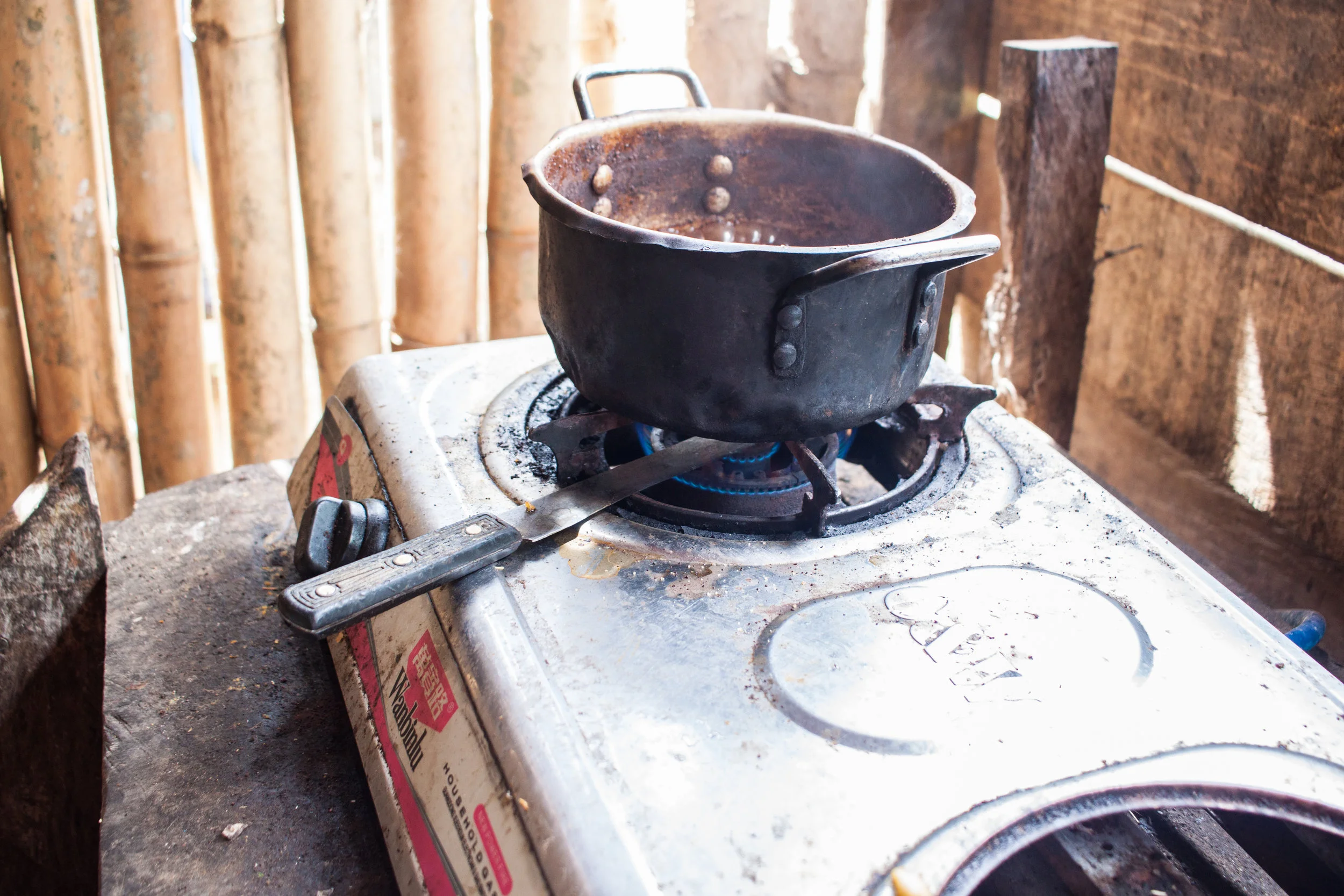
Heating up a knife to package the coffee.
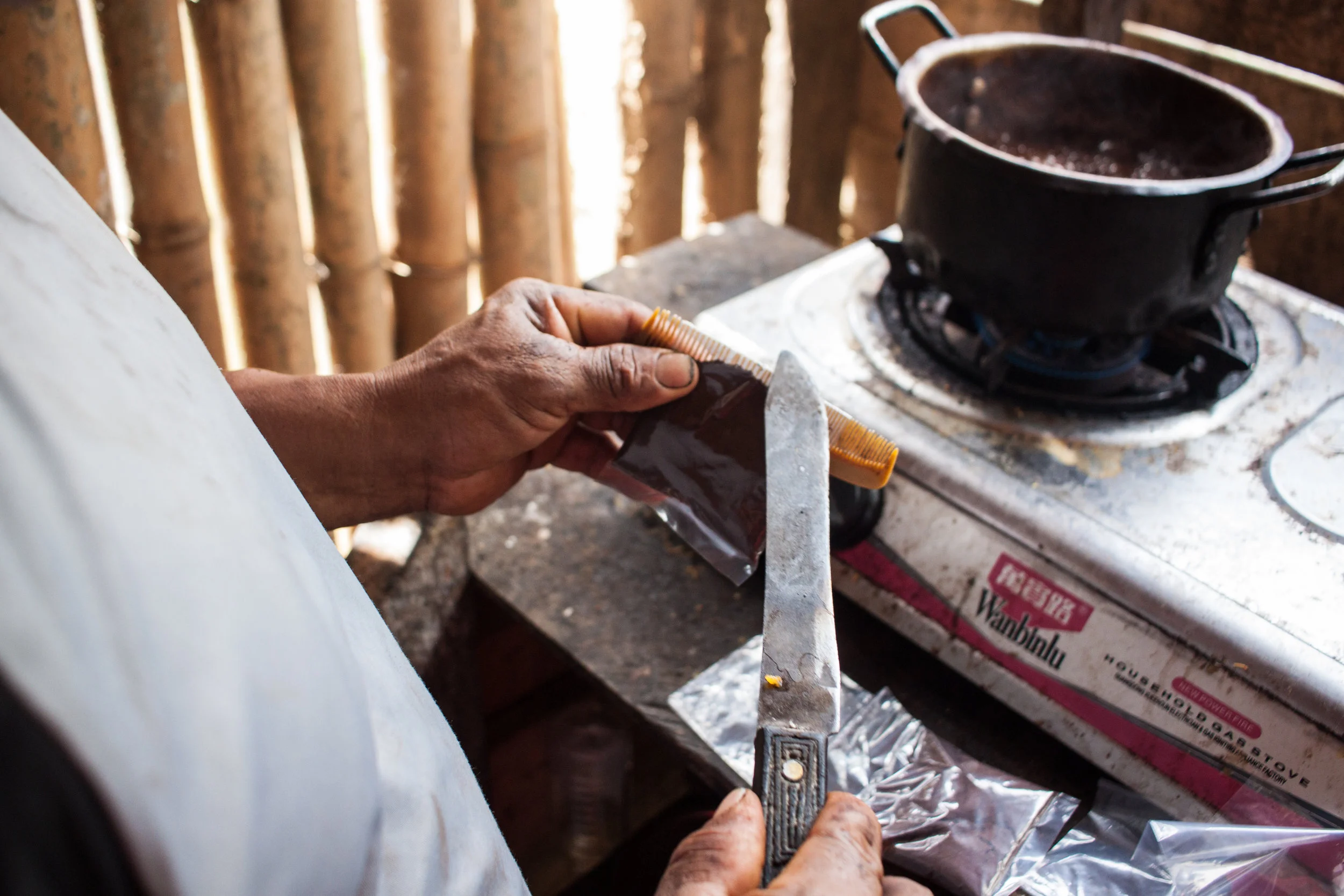
Sealing coffee packets with a knife and comb.
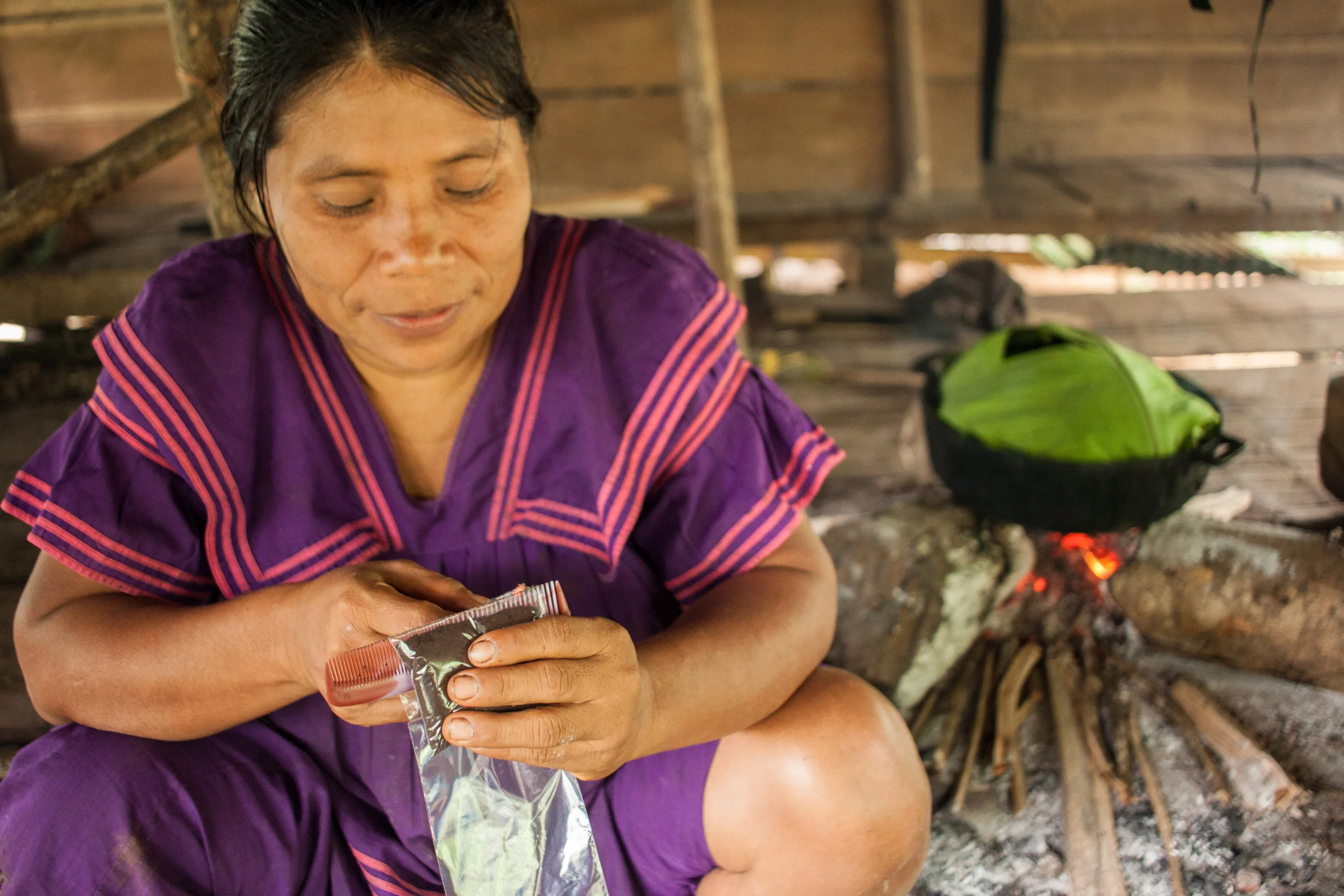
Without a stove to heat the knife, the fire works just as well.
Once the coffee packets are sealed the extra plastic is cut off and the individual packets are packaged into another plastic bag - 12 packets per bag. These are then sold within the community at $1.50 each. While it is not the highest quality of coffee - something I am hoping we can improve a bit - it's a good price for both consumer and vendor.
Most of the coffee produced in Panama is for national consumption, not for exports. The coffee varieties that I will be working with are all Robusta - not known for its flavor but rather for the robust trees and higher caffine content. In the high mountains of the Chiriquí Province café Arabica is produced - known for its smooth and flavorful taste but too expensive for most Panamanians to enjoy. While it sells for a higher price, we here in Samboa will not be growing Arabica because it is more care-intensive and more disease and pest prone. And even if we did manage to grow it here the flavors would not be the same - since apparently every environmental factor influencecs the flavor of end product - and thus no one would buy it from us at the value it's worth in Chiriquí.
Moving forward my work with coffee will look sometimes like this: giving a series of seminarios (seminars) focused on sustainable coffee production, farm management, and business practices; raising group fondos (funds) to construct semilleros (seedbeds) and viveros (nurseries), buy a despulpadora (machine for depulping the coffee) and a pilador (machine for peeling dried coffee beans), build a couple secadoras solares (solar driers), and build an estufa ecológica (eco-stove); and finding a profitable market to sell to. A lot to do but I'll keep you posted on how all the goes!
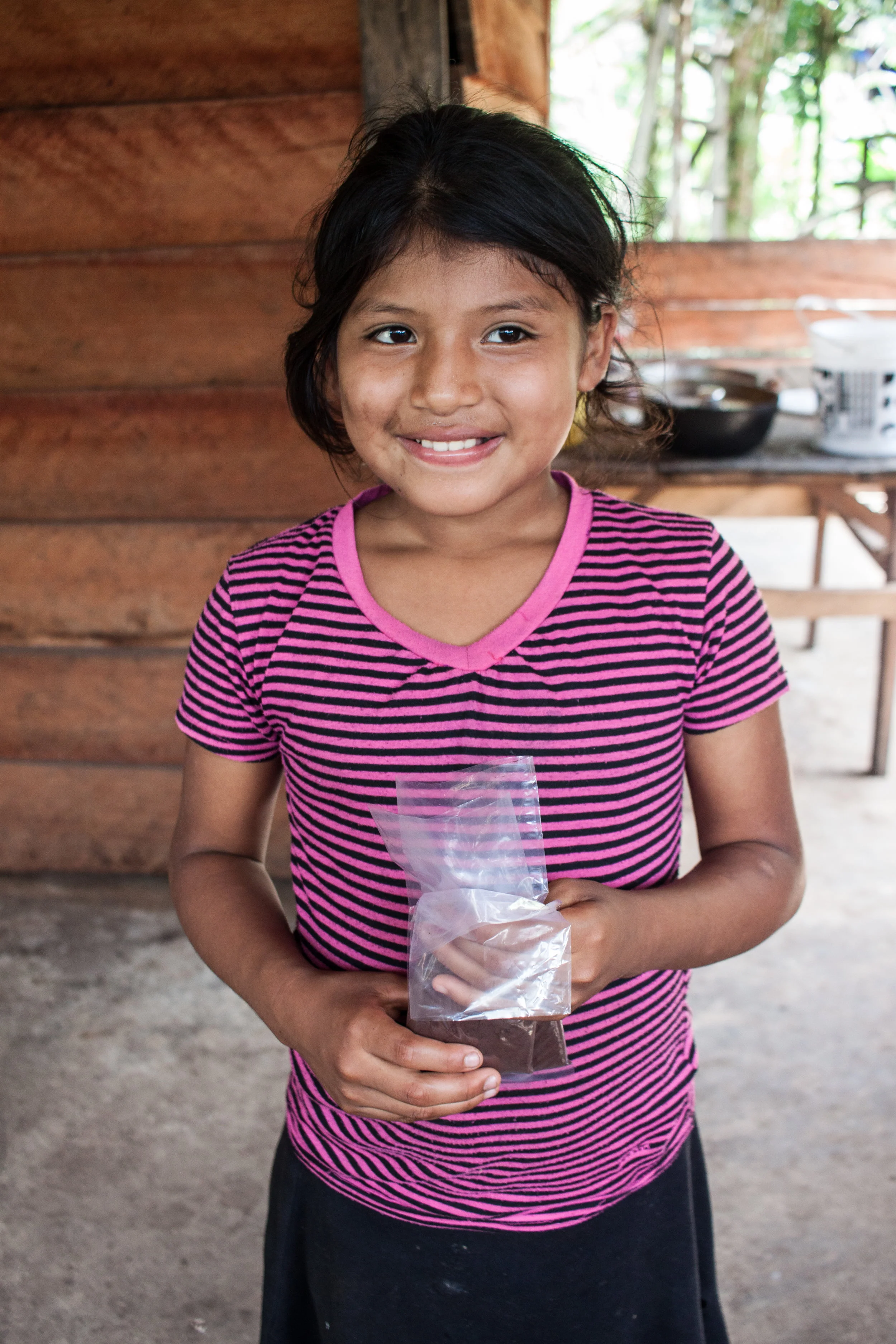
Sealed coffee bags ready to be trimmed down to size.