
Oh The Places They'll Go
Going to school in a community as rural as Samboa can be hard. Out here schools are few and far between, especially for middle school and high school. Some communities have no school or classes at all. Some communities only have a kindergarten and, if they are lucky, escuela primeria (primary school) until 6th grade. If a community does not have an escuela primeria the students have to walk to a neighboring community where there is one (if they want an education). I have met some escuela primeria students who have to walk 1.5 hours to school each day - and these are kids between the ages of 7-14. And access only becomes more difficult as one tries to achieve a higher level of education. One day we met an escuela media (high school) student who walks 3.5 hours to school one-way everyday.
And the walk is not easy. It is hilly, muddy, and the weather is either hot or rainy. Some students also have to cross a river or two on their hike. For this reason, school is usually cancelled when there is too much rain because the rivers become bigger and stronger and can be dangerous for students to cross. On top of all of this students are expected to show up clean for class in their school uniforms - and they do a damn good job.
Most students who live so far away rent a room with a family during the week and go home for the weekends. In the house I have been living with there is also a student who lives with us. Her community is also about 3.5 hours away. Before living with a family in Samboa she would make the walk everyday. This left very little time for meals or studying. She would leave the house at 8 in the morning to arrive for class from 12-6 (with no lunch) and arrive back home around 9 with just enough time to eat, bathe, and get to bed. She cannot afford to rent a room so instead she works cuidando la casa (taking care of the house) - she cooks, cleans, and does laundry in exchange for rent. This is a very common exchange.
Considering all this, making it to graduation is a huge accomplishment. Here in Panama, graduation takes place in the first couple weeks of December. Samboa is fortunate in that it has K-12 and even escuela nocturna (night school) for adults. For Samboa, graduation is a big deal.
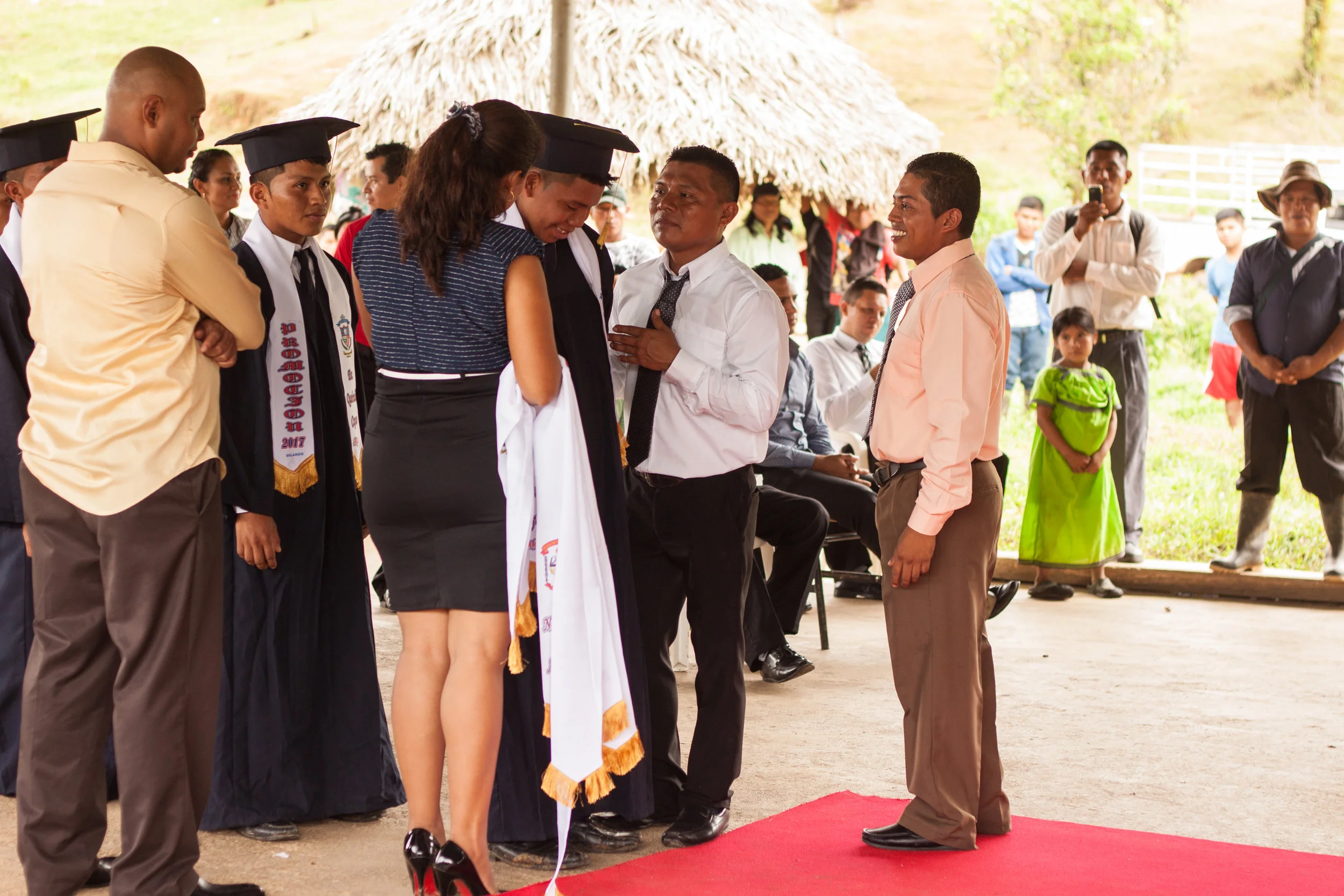
My host brother Julio before walking down the carpet to his high school graduation.
Graduation is a three day event here. The first night is the graduation dinner for the middle school students; the second day is graduation for middle and high school students followed by the dinner for high school students at night; and the third day is graduation and graduation dinner for the night class students.
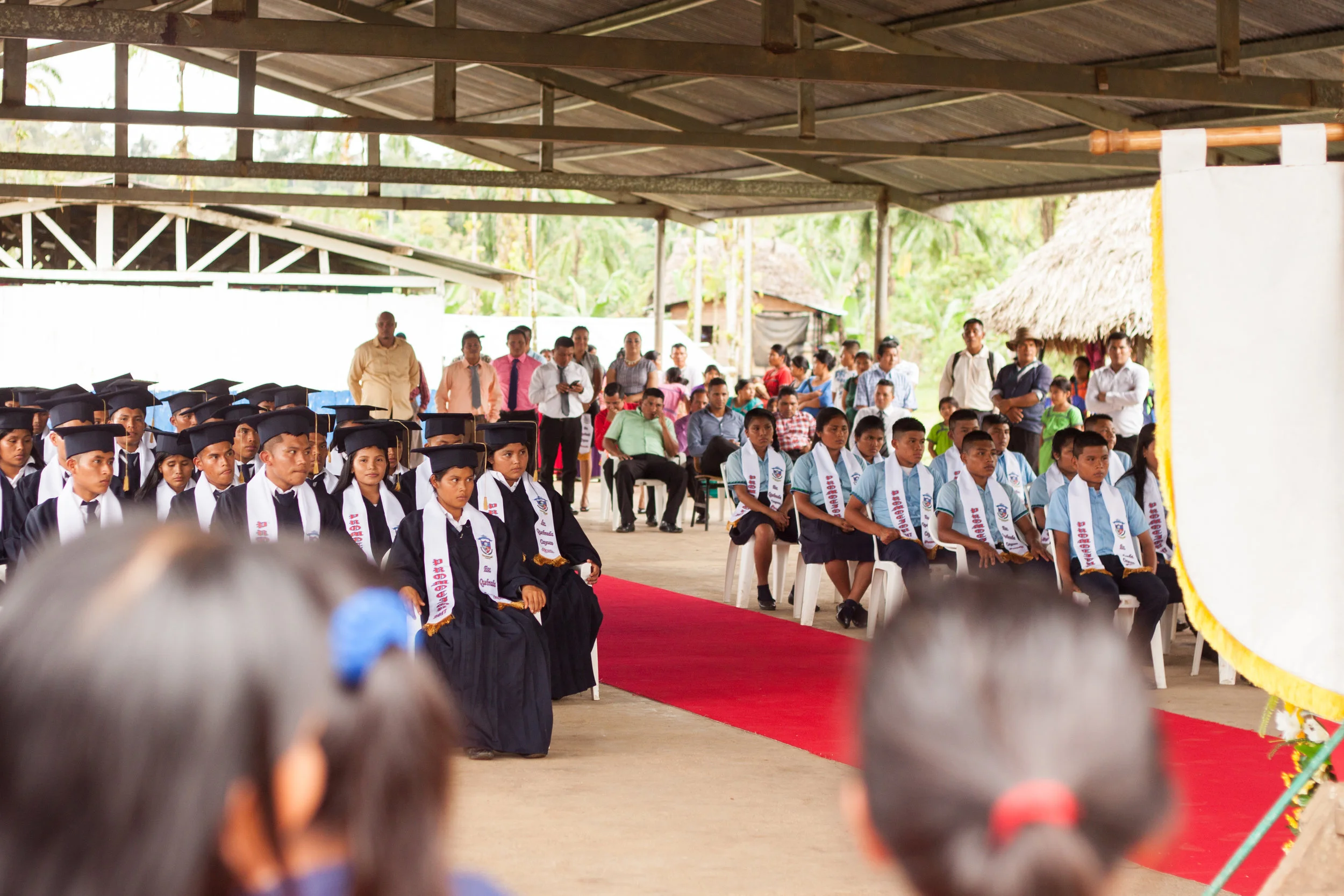
Middle school and high school graduation.
The ceremony was similar to those back in the US: cheesy graduation music, each student walking up as their name is called, receiving a diplomo and shaking the hand of a teacher, lots of pictures being taking, awards being giving, and speeches being made. The parents are proud and the students are excited but in a culture where people do not like to smile or be put on the spot this might be difficult to tell.
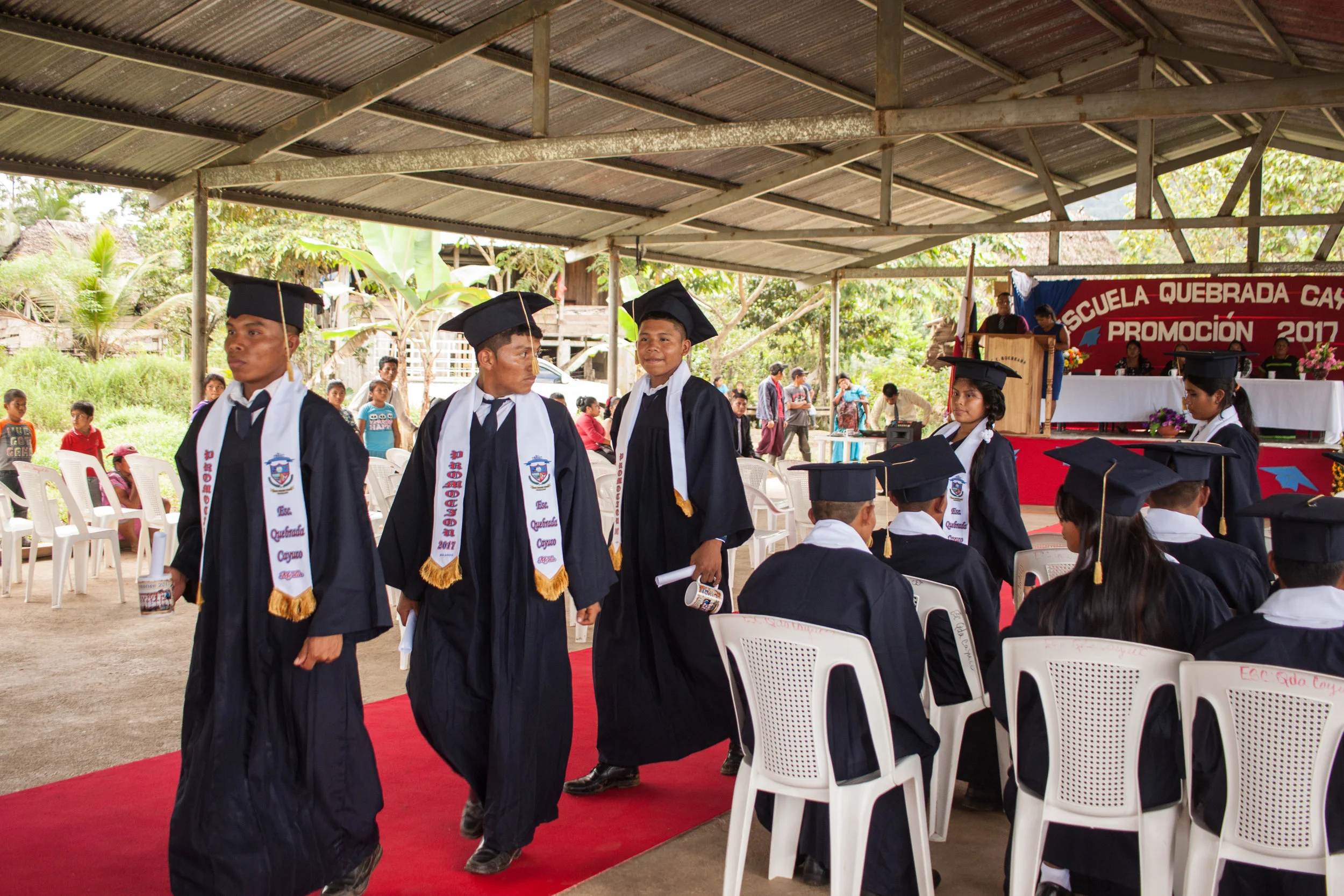
Leaving the stage after receiving diplomas.
The dinner is something different. It takes place at night and the space is lit up by one light powered by a generator (not enough to light up the entire space). Each family has a table of four seats (never confirmed the families had to pay or not?) to include the parents, the student, and a padrino (godfather) or madrina (godmother). These titles of padrino and madrina are not legally binding or anything, just a seat at the table for someone close to the student and family. Each table has a candle for lighting and is served soda, a delicious meal, and sweets.
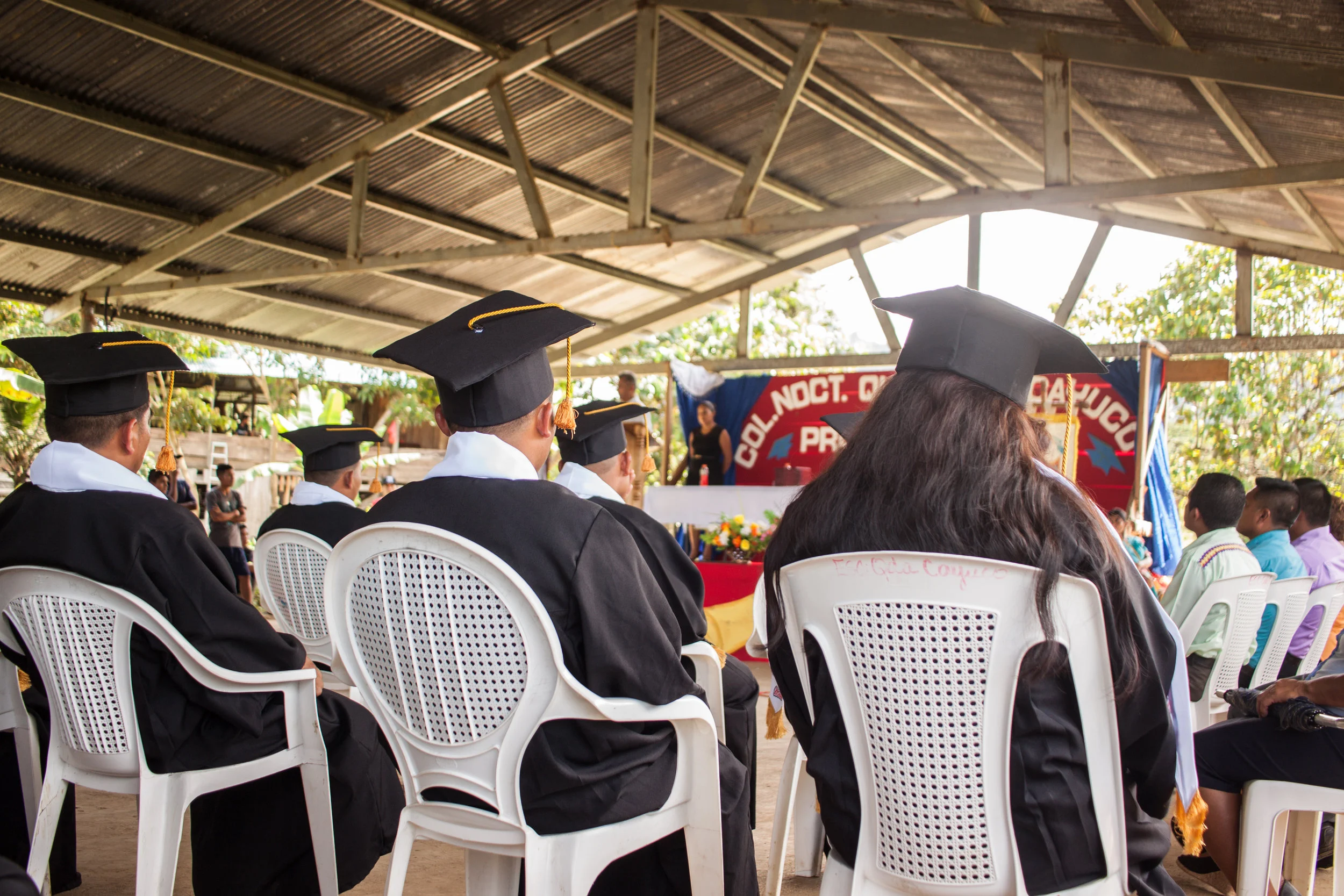
Nocturnal students at their graduation.
During the dinner the students line up with their padrino/madrina and are called up to the front of the room where they are presented with gifts from their family. At the end of the night, after a couple of speeches, each table is presented with a bottle of Martinelli's Sparkling Cider to open and share like champagne. Some people in the community even think that it is alcoholic - it was fun explaining that it's not and that in the US it's given to kids to feel fancy during special occassions.
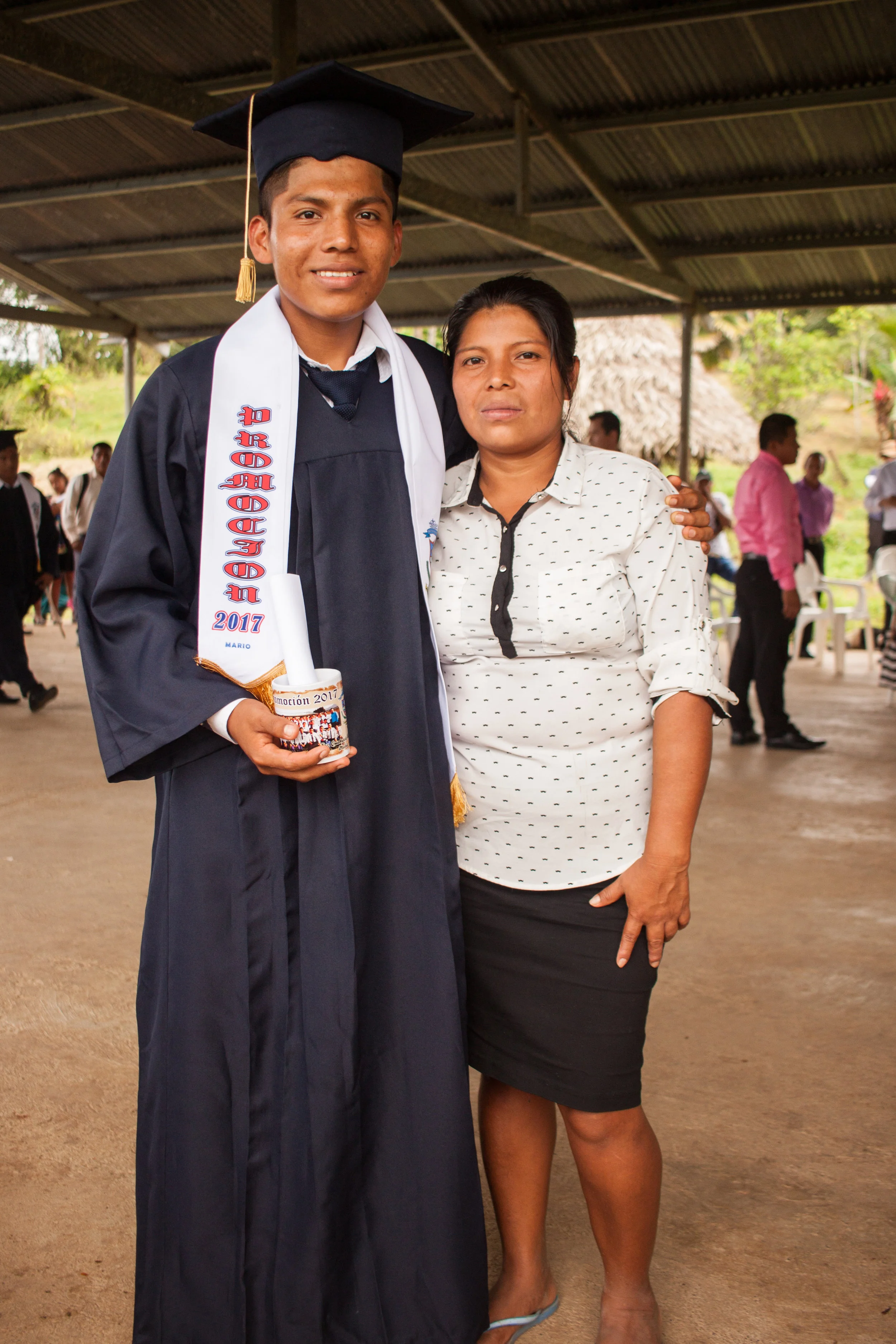
Damari and her son after graduation.
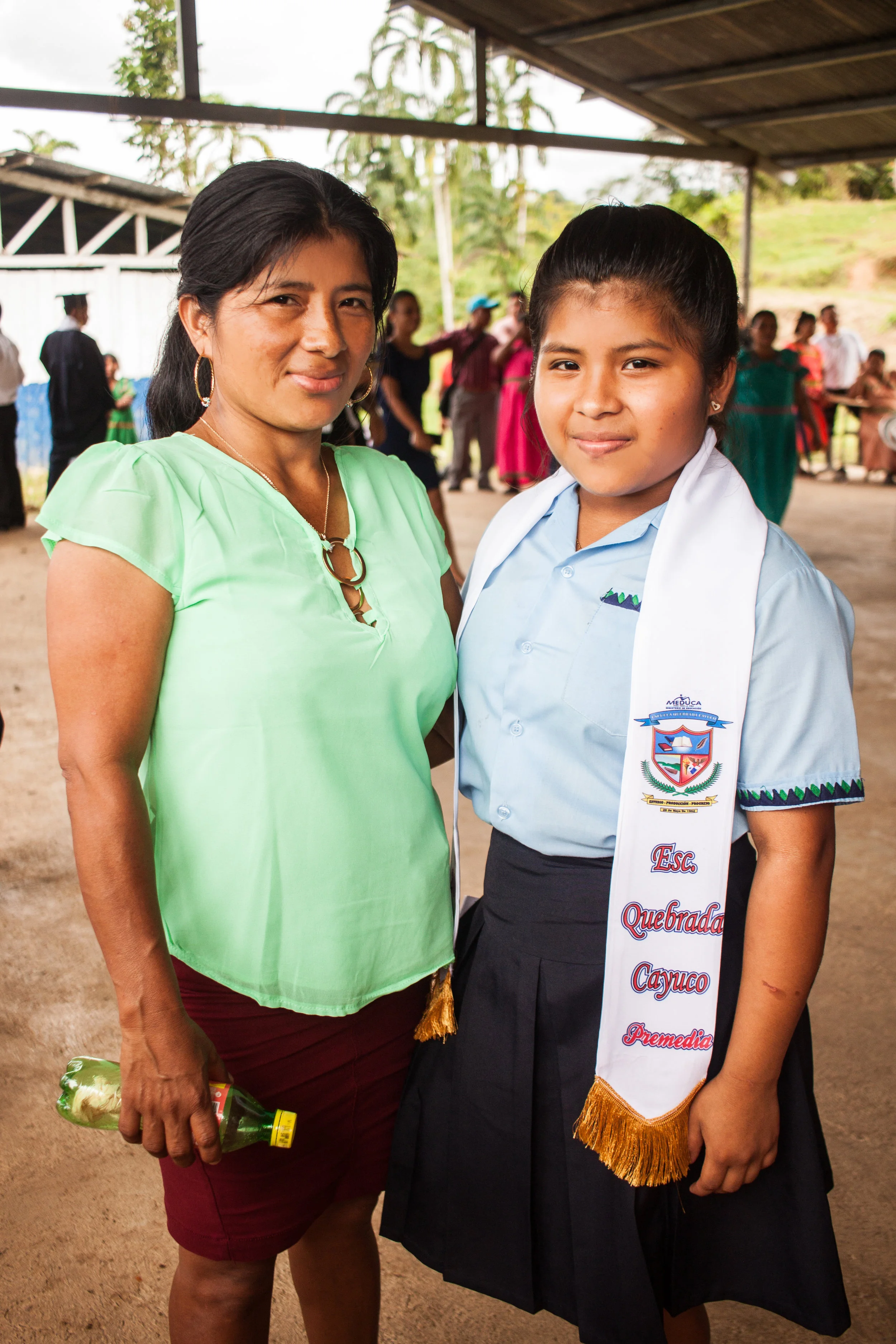
Graciela and her daughter after graduation.
After the dinner there is a lot of drinking, dancing, and also a small amount of fighting (very cultural for both men and women to get in fist fights here). Chito and I did not stay up long enough to witness any of it but the fighting could be heard from our bedroom at 4 in the morning. The music would play all night and the last of the borrachos (drunks) would find their way home at around 7 in the morning. Note: our community members do not drink a lot but when they do so for special occassions they go hard.
It was an exciting event to say the least. For these students, the act of graduating is a huge accomplishment. For many of them they are part of the first generation in their families to graduate with a high school diploma. These students now have the opportunity to get a college education, something fairly new to this area of the Comarca Ngäbe-Búgle. This year only about 5 escuela media graduates are heading off for university, but I only see that number going up as the years continue.